

Gullfoss
La cascade dorée d'Islande — un géant à deux étages qui fait trembler le sol
Conseils pratiques
- Arrivez tôt le matin ou en fin d'après-midi pour éviter les bus touristiques (affluence maximale de 10 h à 15 h)
- La plateforme inférieure vous trempe — veste et pantalon imperméables indispensables
- Chaussures imperméables et antidérapantes ; les chemins sont glissants toute l'année
- Les plateformes haute et basse offrent des perspectives totalement différentes — faites les deux
- Le Gullfoss Café sert une excellente soupe d'agneau et des gâteaux maison
- Parking gratuit et toilettes propres au centre d'accueil
- 1 h 30 de Reykjavík via la Route 35 ; dernier arrêt du Cercle d'Or
- Hiver : l'escalier vers la plateforme inférieure est souvent fermé à cause du verglas ; la plateforme haute reste accessible
Gullfoss fait partie de ces lieux que les photos ne rendent vraiment pas. La Hvítá, gonflée par les eaux de fonte du glacier Langjökull, chute en deux étapes avant de disparaître dans un canyon étroit — et ce qui vous frappe en premier, ce n'est pas la vue mais le son : un grondement sourd, profond, que vous ressentez autant dans la poitrine que dans les oreilles.
Les chutes
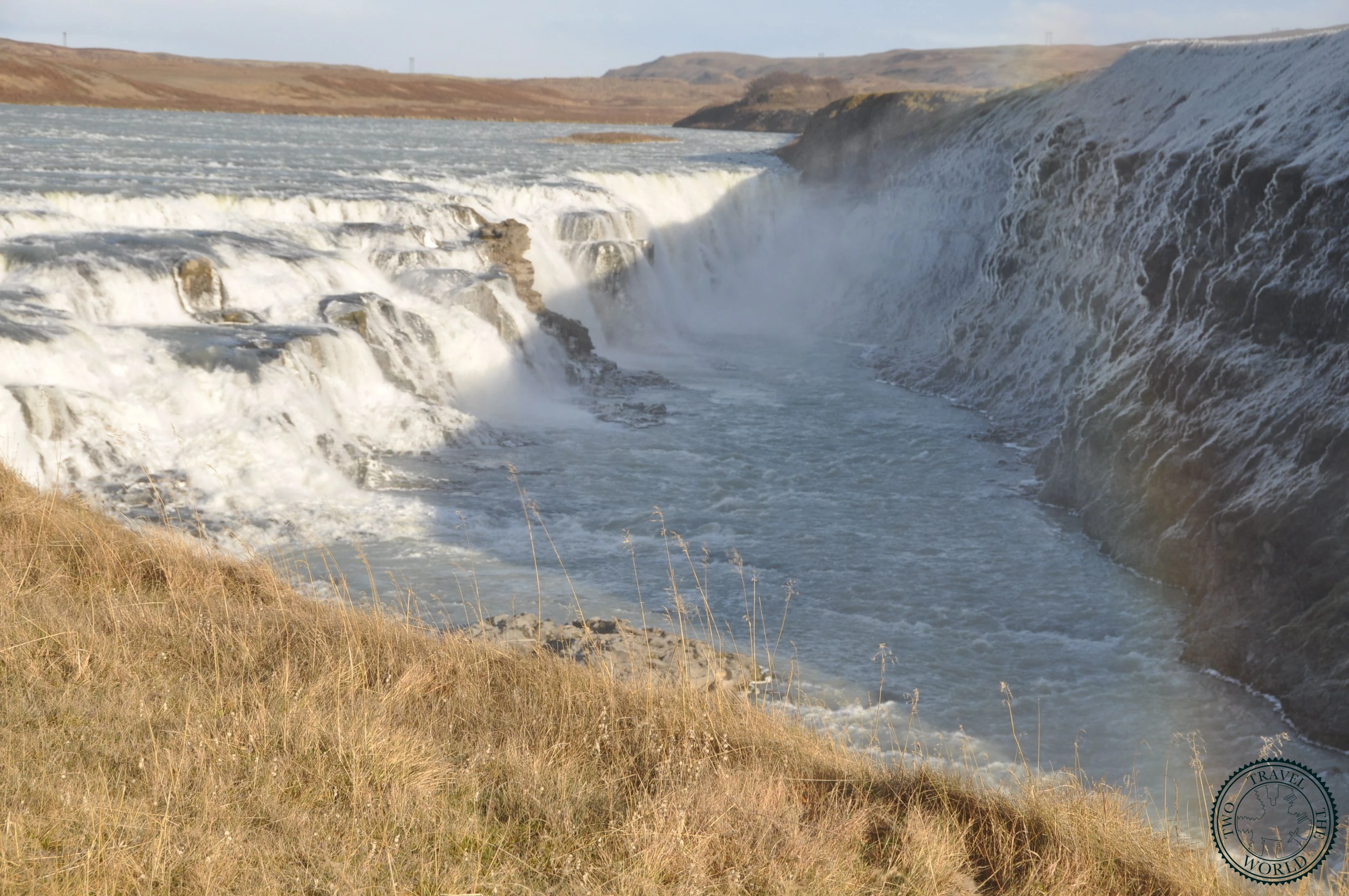
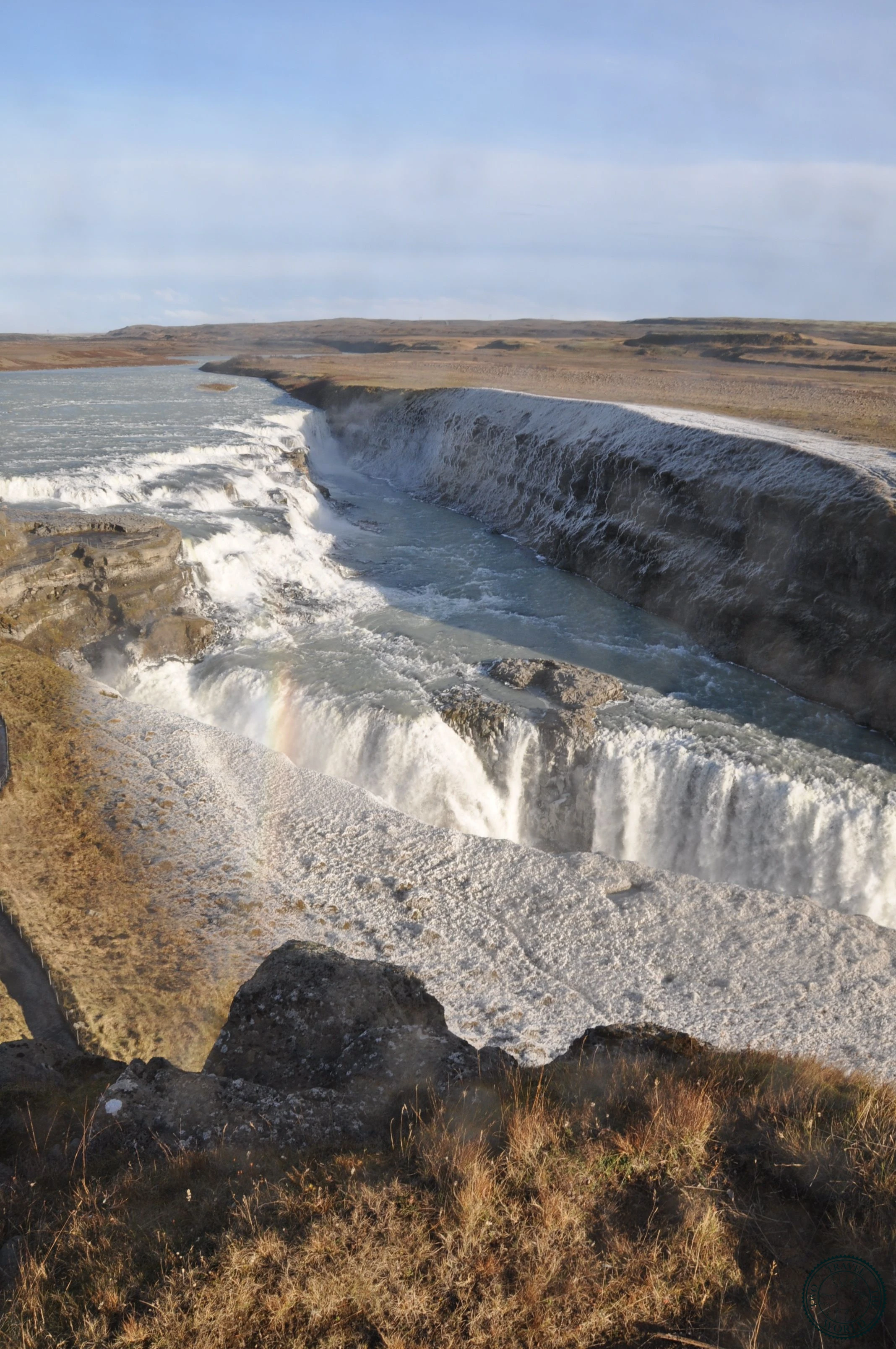
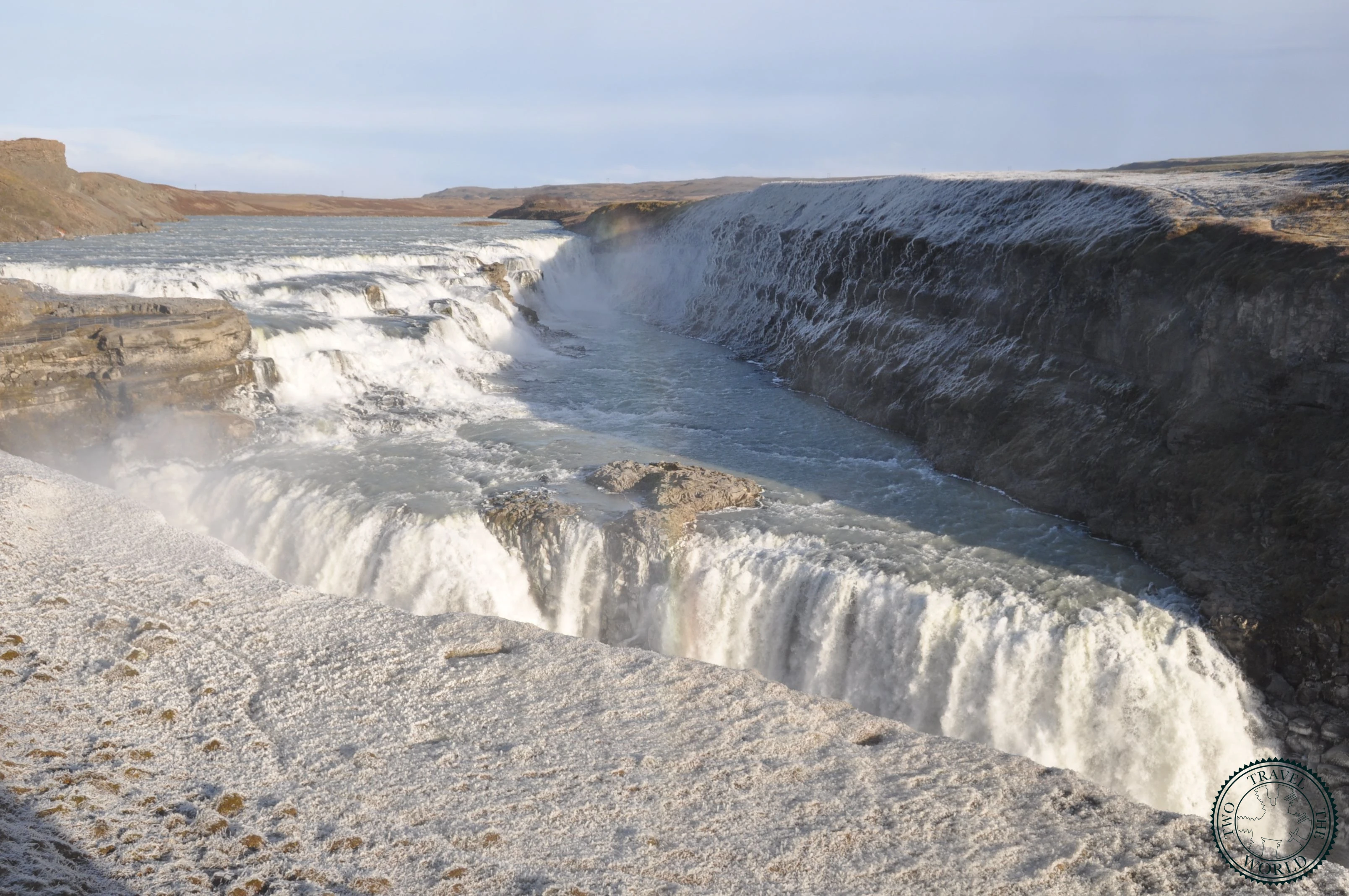
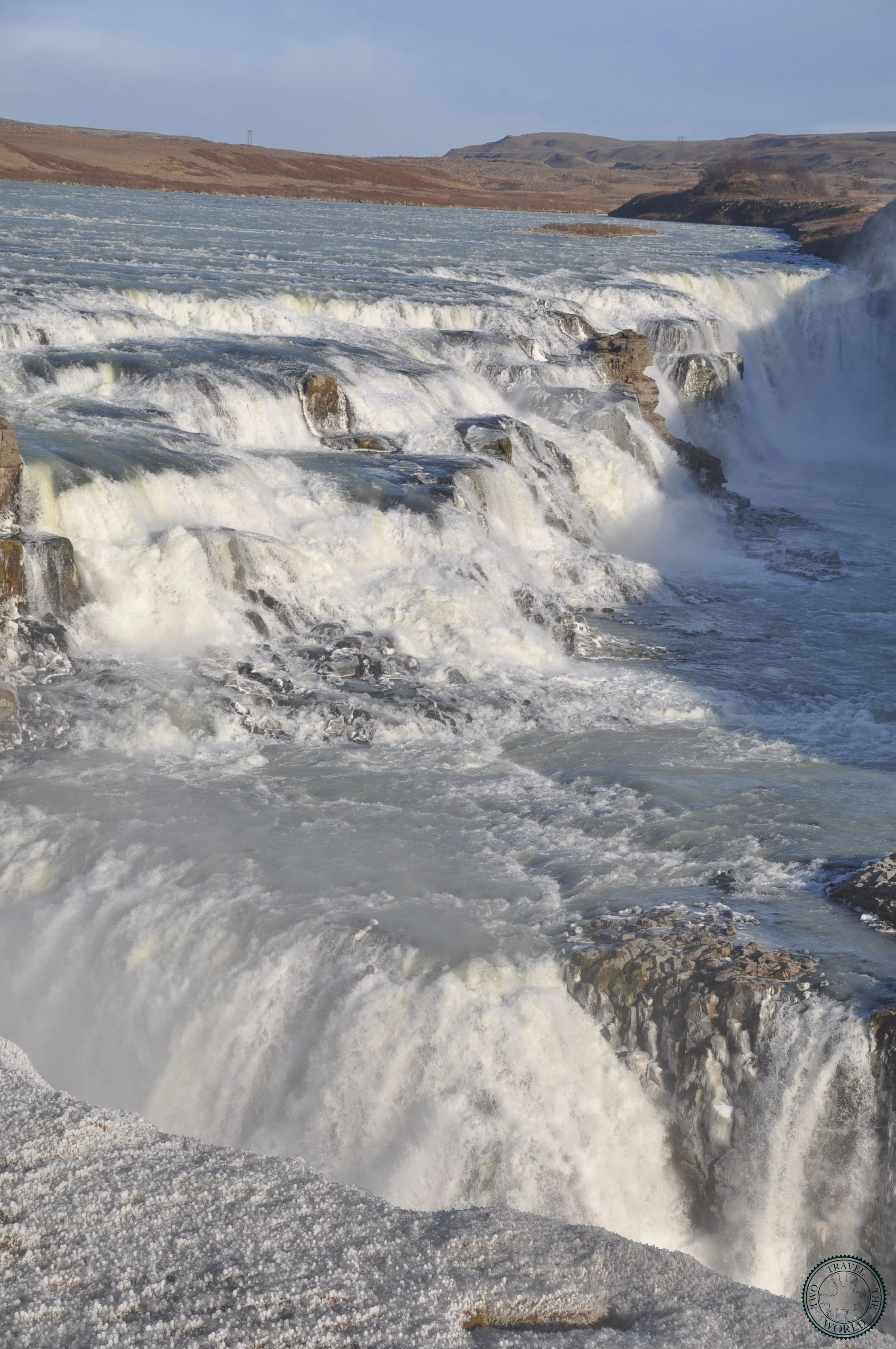
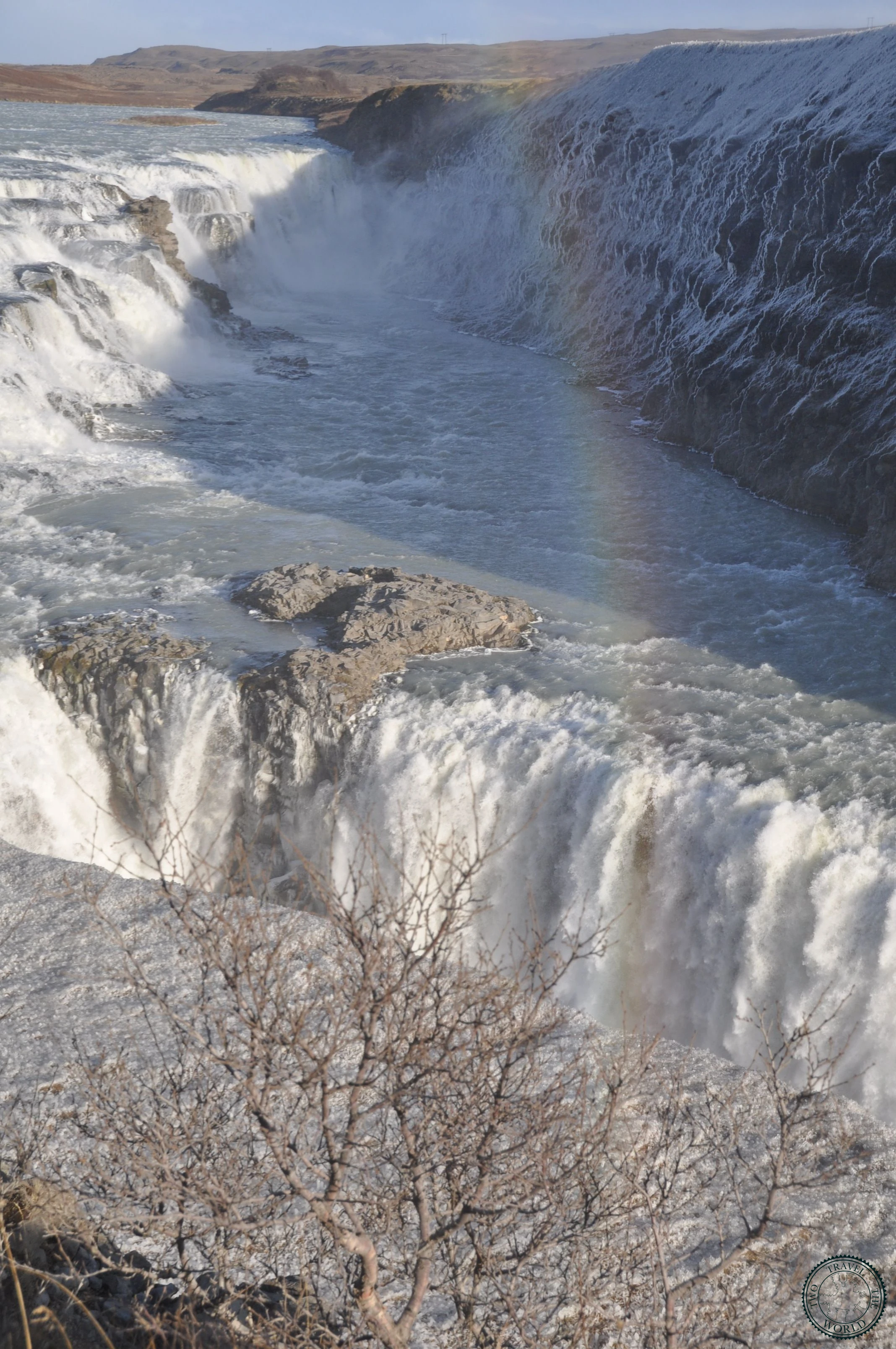
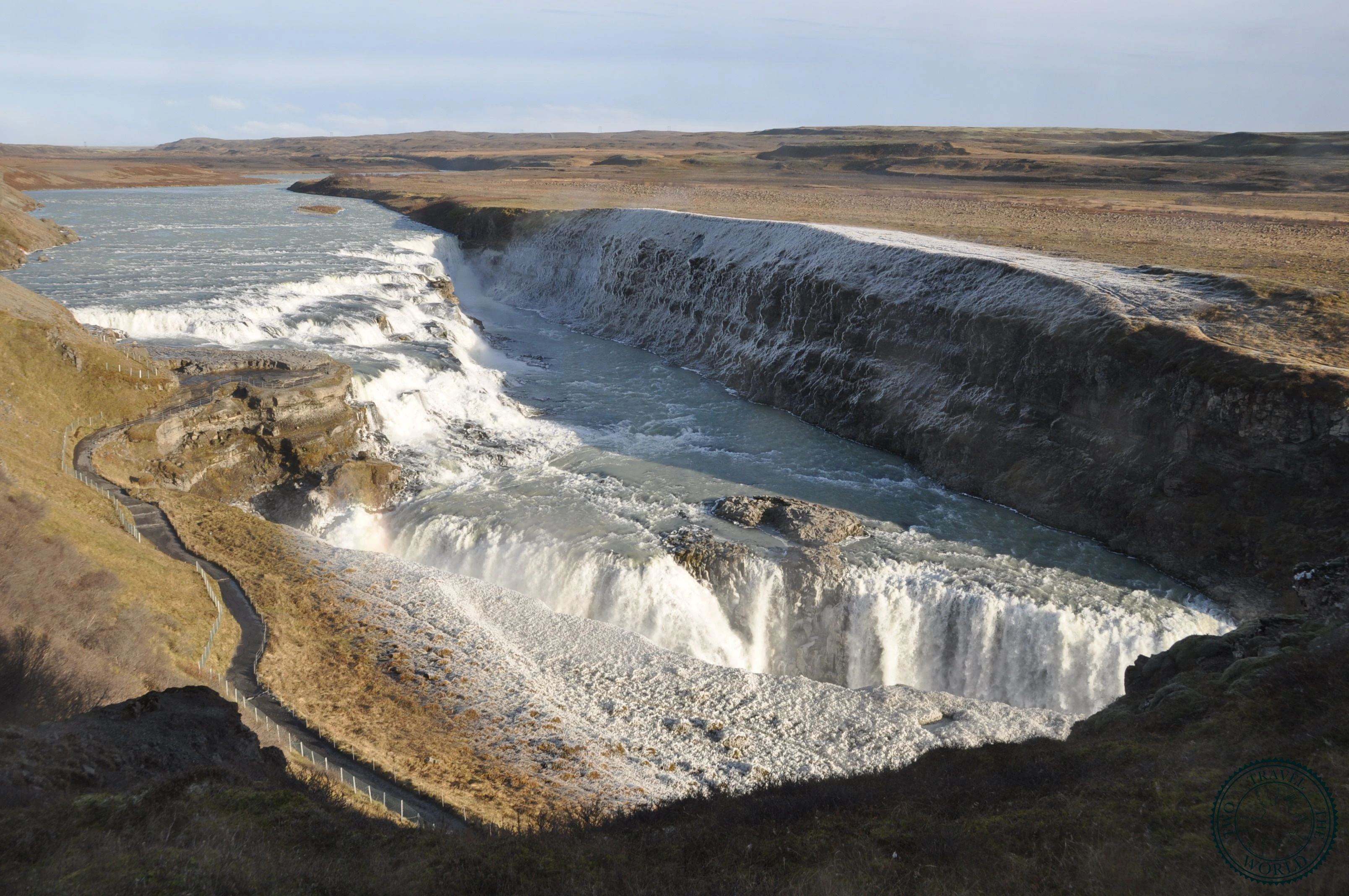
La Hvítá descend un large escalier de roche incurvé avant de plonger en deux étapes : une première chute de 11 mètres où la rivière s'étale sur un rebord de dolérite dure, puis — presque à angle droit — un plongeon de 21 mètres dans une crevasse si étroite que, sous certains angles, la rivière semble tout simplement disparaître dans la terre. La chute totale est de 32 mètres.

Le canyon en contrebas mesure environ 2,5 km de long, 20 mètres de large et jusqu'à 70 mètres de profondeur. Les géologues pensent qu'il a été creusé soit par une crue glaciaire catastrophique à la fin de l'ère glaciaire, soit, plus probablement, par le travail patient de la rivière sur des milliers d'années, exploitant une couche tendre de conglomérat et de gravier prise en sandwich entre des couches de basalte plus dures. Cette couche de gravier a son importance, car Gullfoss n'a pas fini de se transformer : les chutes reculent encore en amont à mesure que l'eau emporte les sédiments sous les rebords de dolérite.
Le nom signifie « cascade dorée ». L'explication la plus probable est la farine glaciaire transportée par la Hvítá, un sédiment rocheux très fin qui donne à l'eau sa couleur brun doré au soleil. D'autres évoquent la teinte dorée que prennent les chutes dans la lumière de fin d'après-midi. Il existe aussi une légende sur un Viking qui aurait jeté son or dans les chutes plutôt que de le laisser à quiconque. Le nom a si bien pris que c'est lui qui a donné son nom à l'ensemble du circuit du Cercle d'Or.
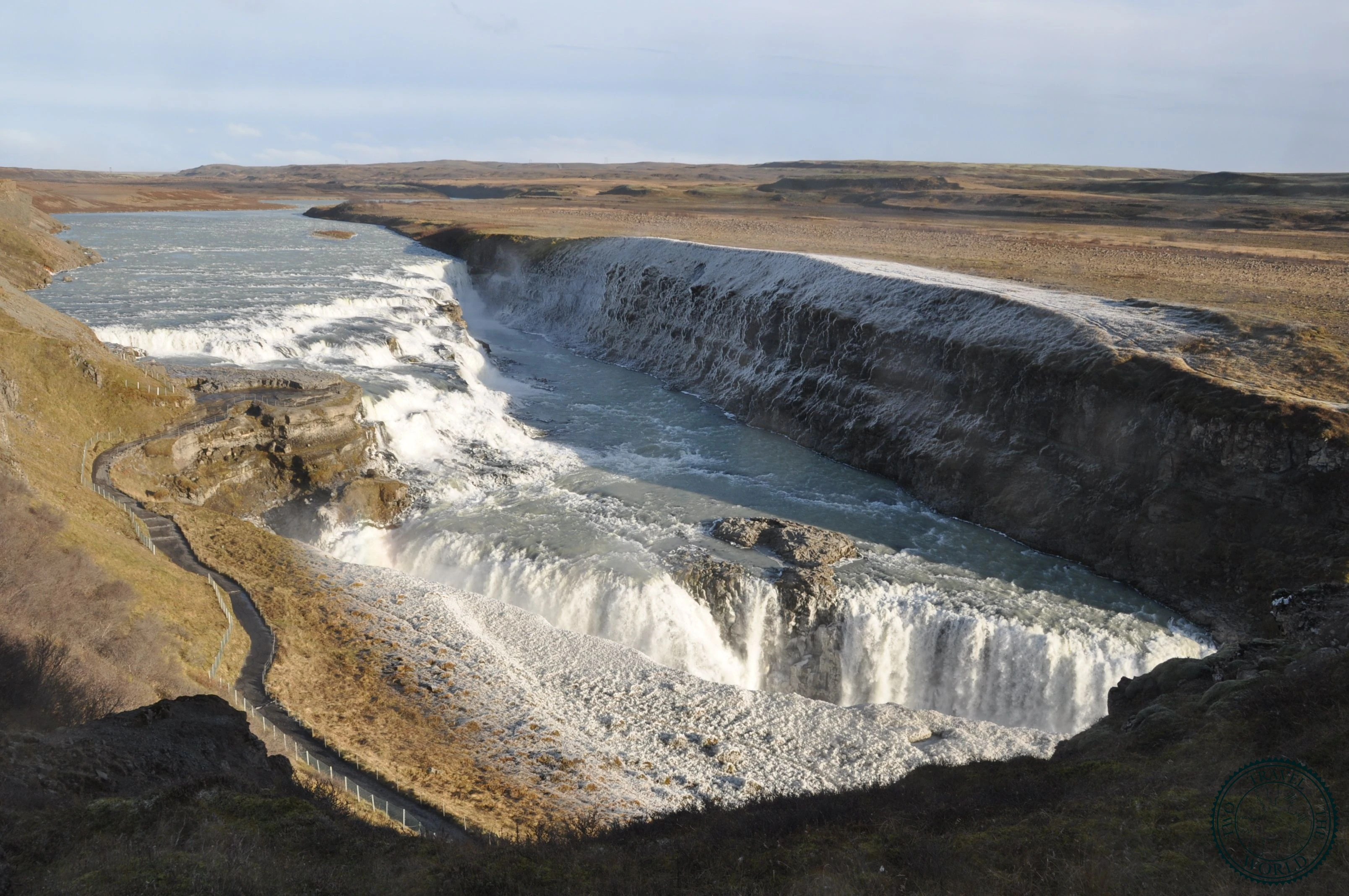
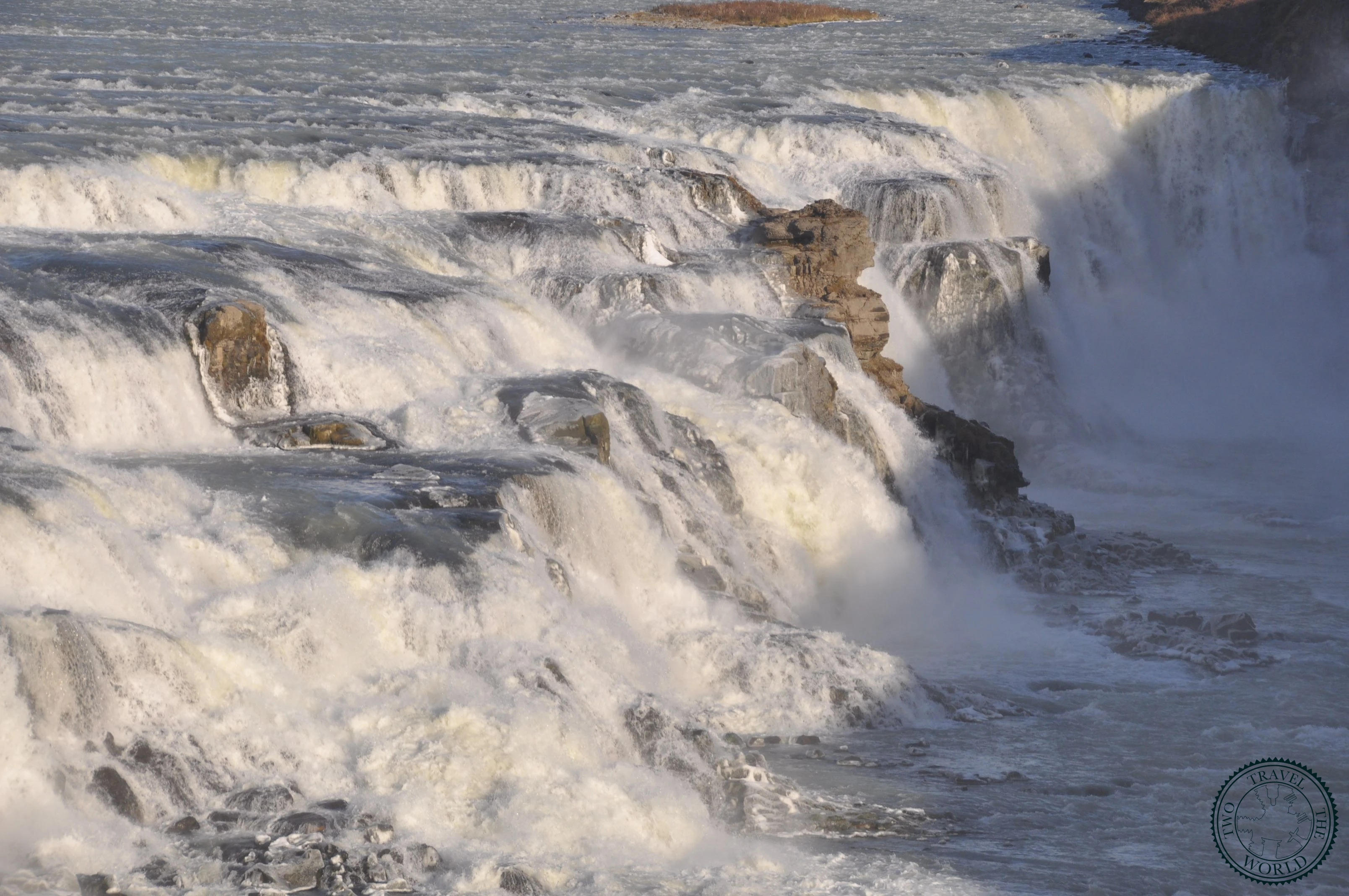
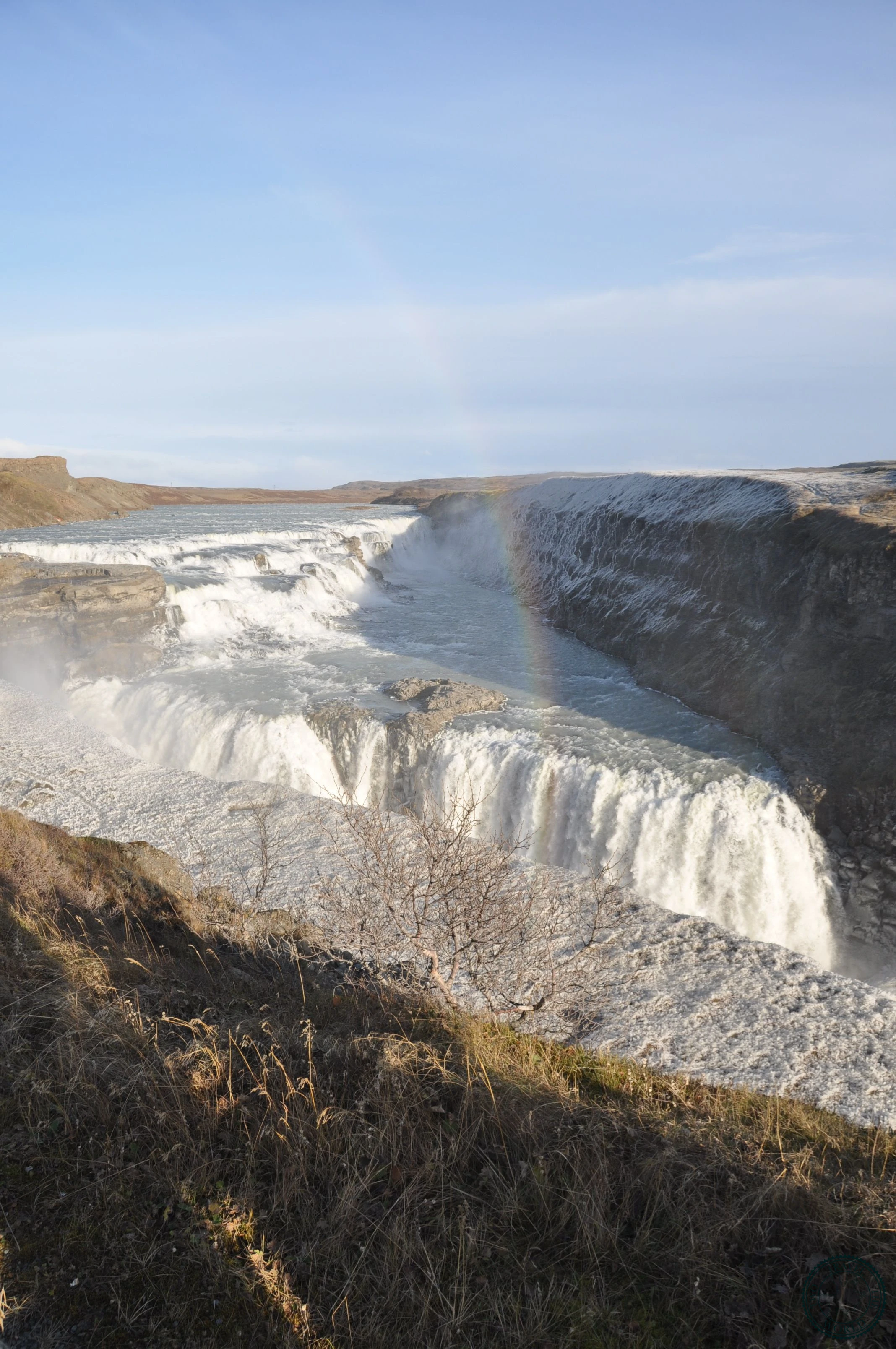
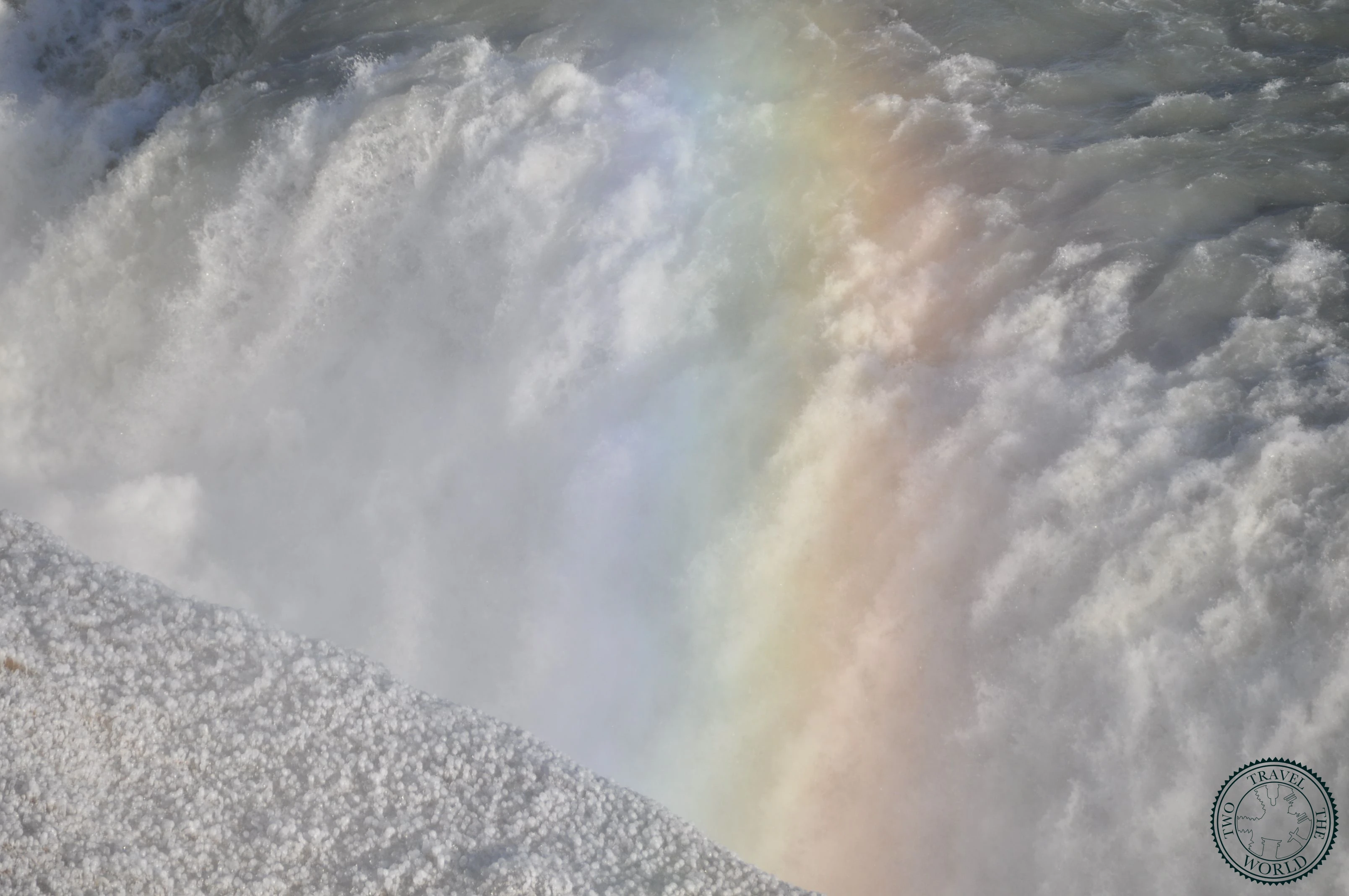
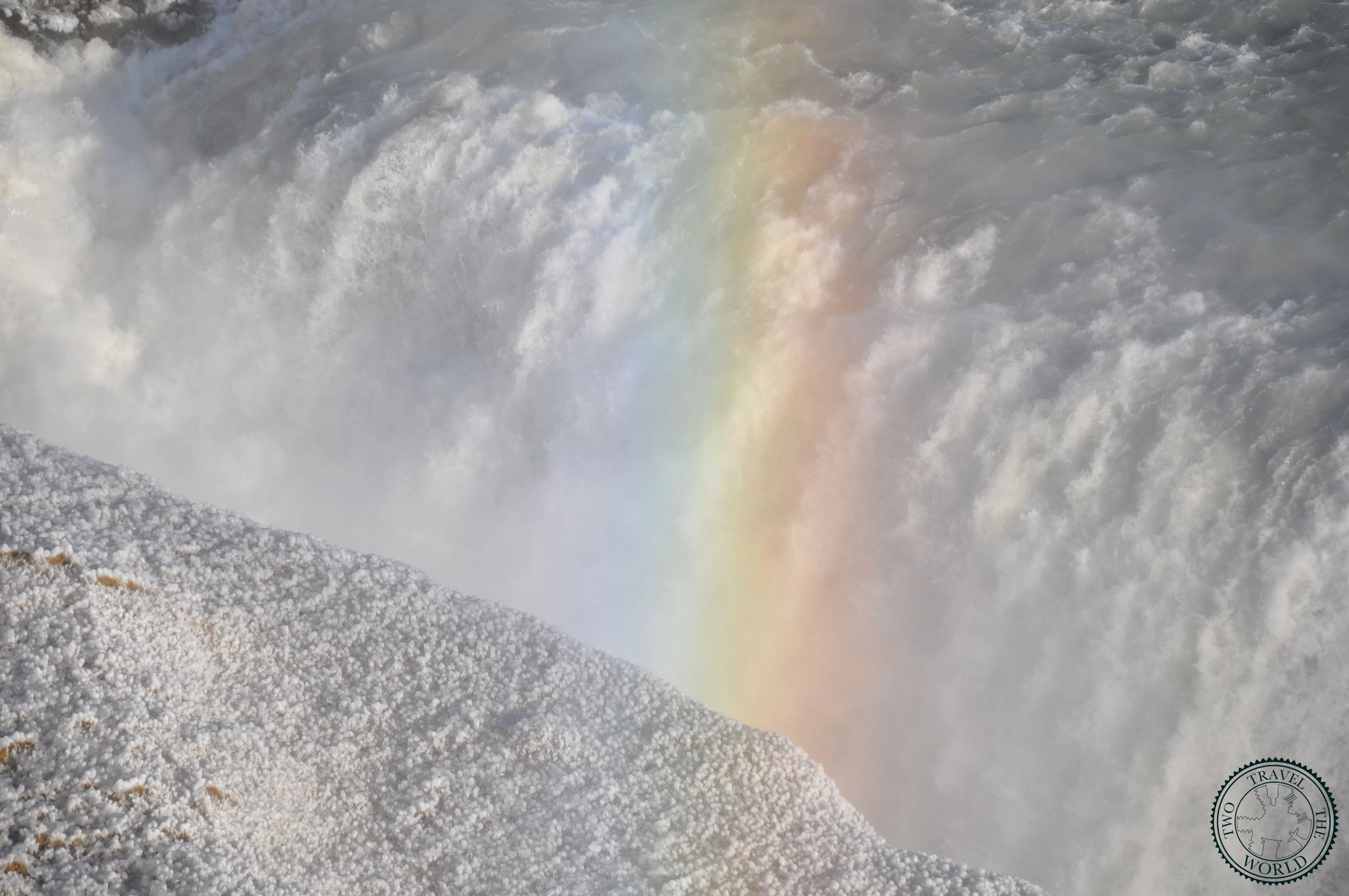
Lors de notre visite par un après-midi ensoleillé, des arcs-en-ciel traversaient en permanence les embruns — le genre de spectacle qui vous coupe la parole en pleine phrase. Les jours de ciel couvert, les chutes prennent un aspect plus brut, plus puissant : rien que de l'eau blanche et de la brume grise, les bords du canyon se fondant dans les nuages.
Gullfoss a failli devenir un barrage hydroélectrique. En 1907, un homme d'affaires anglais nommé Howell a loué les chutes au propriétaire terrien Tómas Tómasson pour exploiter la Hvítá. Sa fille Sigríður, née à la ferme Brattholt près du canyon, a refusé de laisser faire.
Sigríður a multiplié les allers-retours à Reykjavík, 120 km dans chaque sens, pour faire campagne contre le projet. Elle a rencontré des responsables gouvernementaux, rallié des soutiens. La légende veut qu'elle ait fait le trajet pieds nus, mais l'historien Helgi Skúli Kjartansson note que les voyages se faisaient sans doute à cheval. Elle aurait menacé de se jeter dans les chutes si les travaux commençaient.
Elle a engagé un avocat : Sveinn Björnsson, qui deviendra plus tard le premier président de l'Islande lors de la proclamation de la république en 1944. L'affaire n'a pas abouti devant les tribunaux, mais ce n'était pas nécessaire. Le projet de Howell a manqué de fonds et les paiements du bail ont cessé. Sigríður a perdu le procès et gagné le débat. Le temps que les plans du barrage s'effondrent, Gullfoss était devenu un lieu que les gens tenaient à protéger, et ce changement de regard a compté bien plus que n'importe quelle décision de justice.
Plateforme haute vs plateforme basse
Plateforme haute
La plateforme haute offre une vue panoramique sur les deux niveaux de la cascade et le canyon qui s'étire au loin. C'est le meilleur endroit pour les photos d'ensemble. Le chemin depuis le parking est accessible en fauteuil roulant, environ 5 minutes sur un sentier de gravier. Le vent là-haut peut être violent. Nous avons vu le chapeau de quelqu'un s'envoler directement dans le canyon.
Plateforme basse
La plateforme basse vous amène au bord même de la première chute. Les embruns y sont permanents et le bruit assourdissant — vous ressentez la puissance de l'eau dans la cage thoracique. Un escalier descend depuis la plateforme haute (5 à 10 minutes de plus). Le chemin est glissant en toutes saisons. Des chaussures robustes et antidérapantes sont indispensables. En hiver, des crampons légers valent le coup. La plateforme basse ferme quand les conditions sont verglacées, c'est-à-dire la majeure partie de l'hiver.

Été vs hiver
En été, jusqu'à 140 mètres cubes d'eau par seconde s'écrasent sur les chutes, avec un pic en juin et juillet quand la fonte du Langjökull est à son maximum. Les embruns sont au plus fort, les arcs-en-ciel les plus fréquents, les collines environnantes sont vertes. Lors des crues printanières, le débit peut grimper jusqu'à près de 2 000 m3/s. À ce moment-là, Gullfoss devient l'une des cascades les plus puissantes d'Europe.
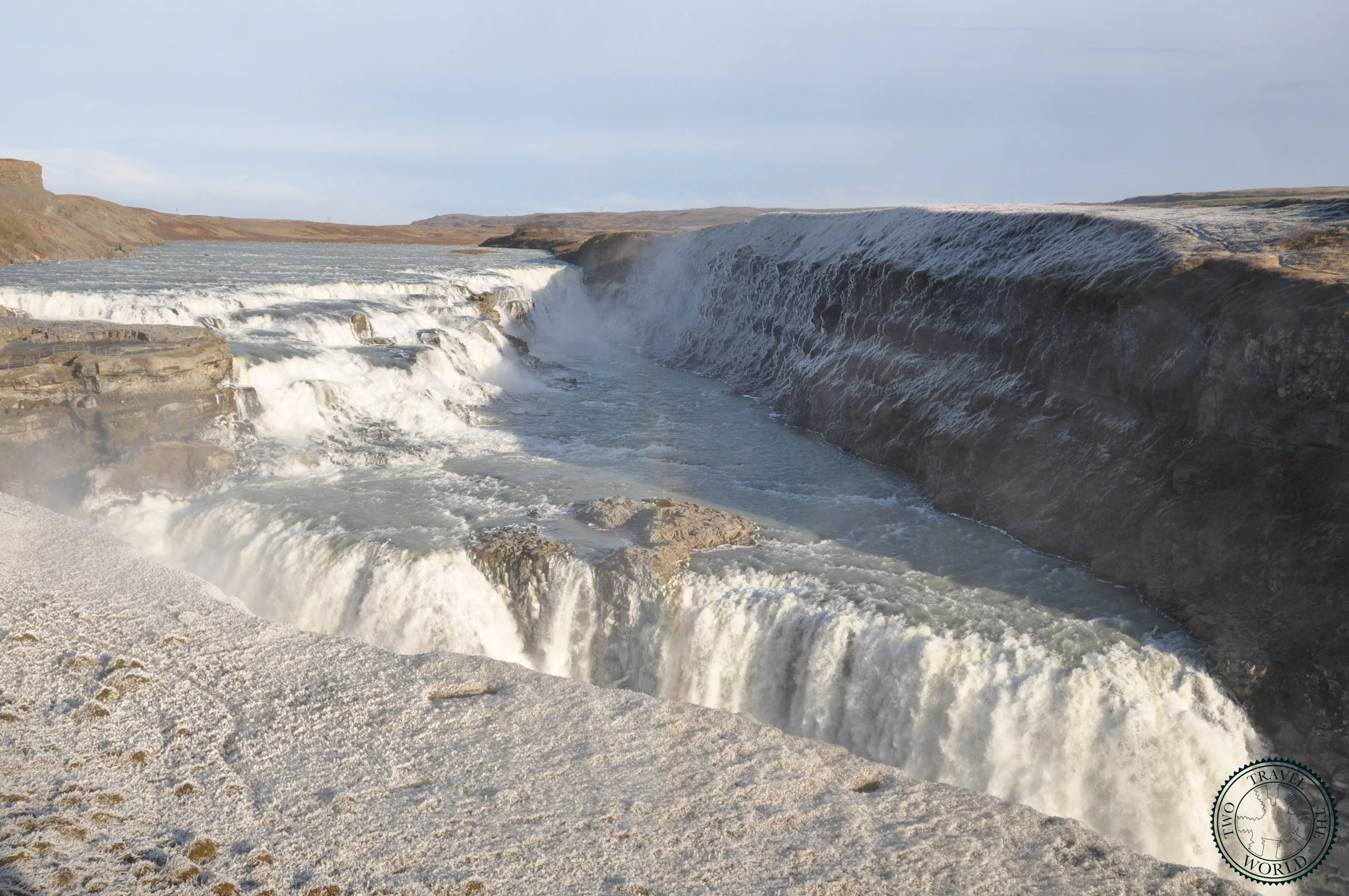
L'hiver fait passer le débit à environ 80 m3/s, mais les chutes n'en sont que plus impressionnantes. Les parois du canyon se couvrent de glace, stalactites acérées et plaques translucides qui captent la lumière rasante de l'hiver. Le paysage se drape de blanc. Avec seulement 4 à 5 heures de lumière du jour et bien moins de visiteurs, vous avez le site presque pour vous. Les nuits claires, les aurores boréales sont visibles depuis les environs.
Placez-vous au point de vue inférieur et la puissance brute de la Hvítá vous frappe en pleine poitrine — avec une bonne dose d'embruns.
Photo Gallery


More Experiences in Reykjavik
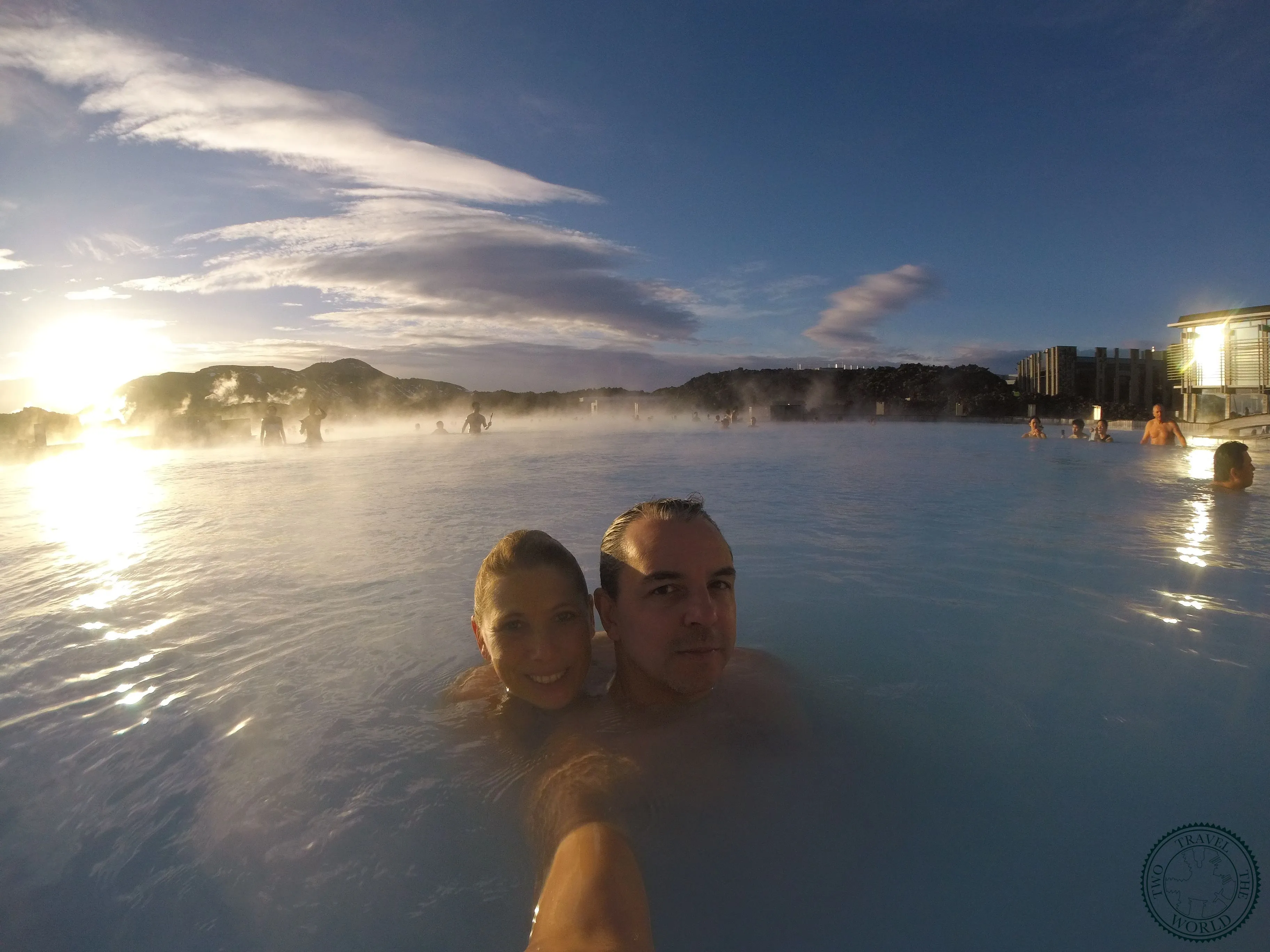
Blue Lagoon
We'll be honest — we went in sceptical about the hype and the price tag. But floating in milky-blue water surrounded by black lava rock at 8 AM, with steam rising into the cold air and hardly anyone else around, won us over.
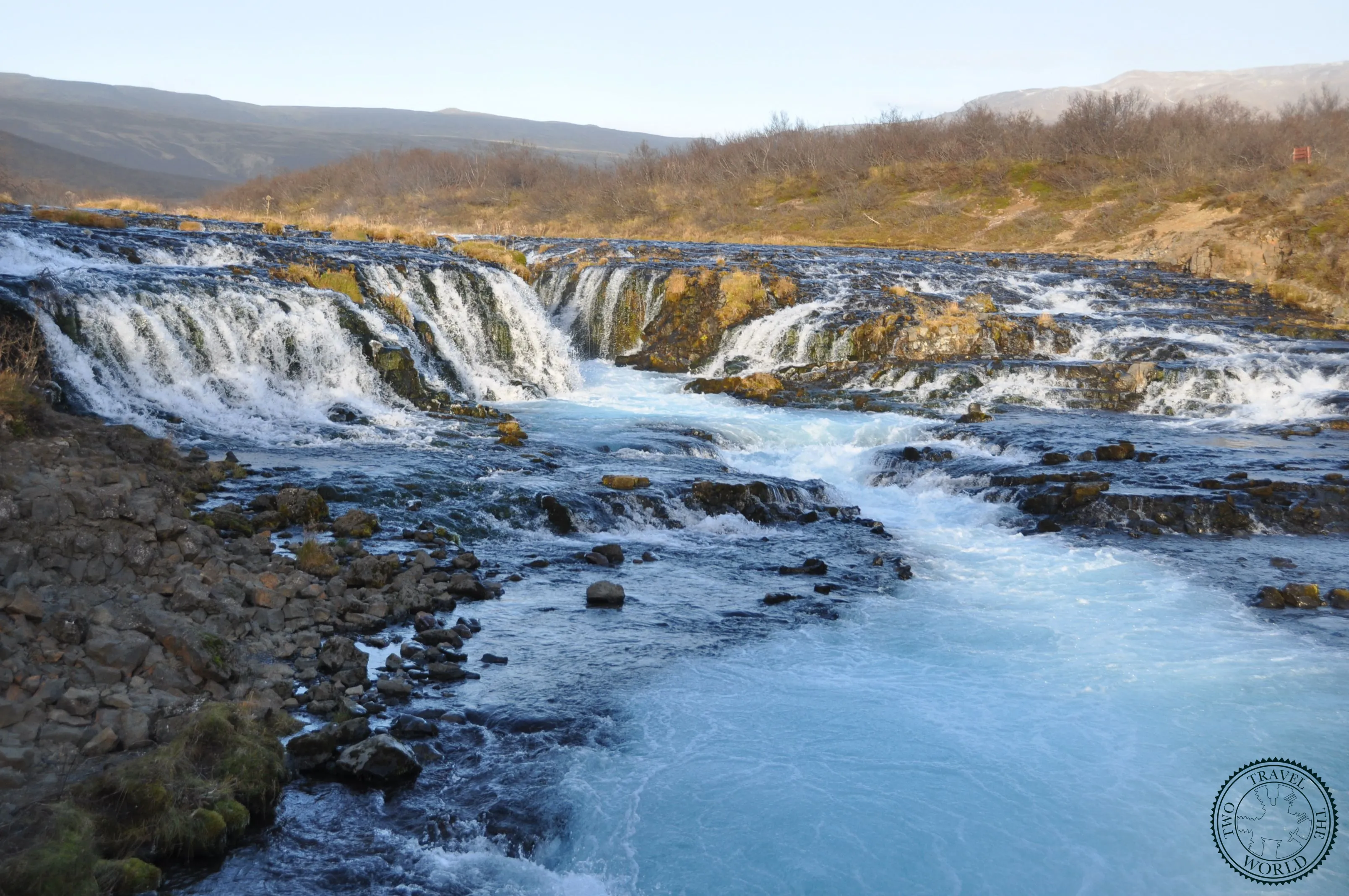
Brúarfoss
Brúarfoss might be the most vivid blue waterfall in Iceland — glacial meltwater from Langjökull filters through lava rock and emerges an almost unreal turquoise, cascading across a wide rocky shelf in a series of braided channels.
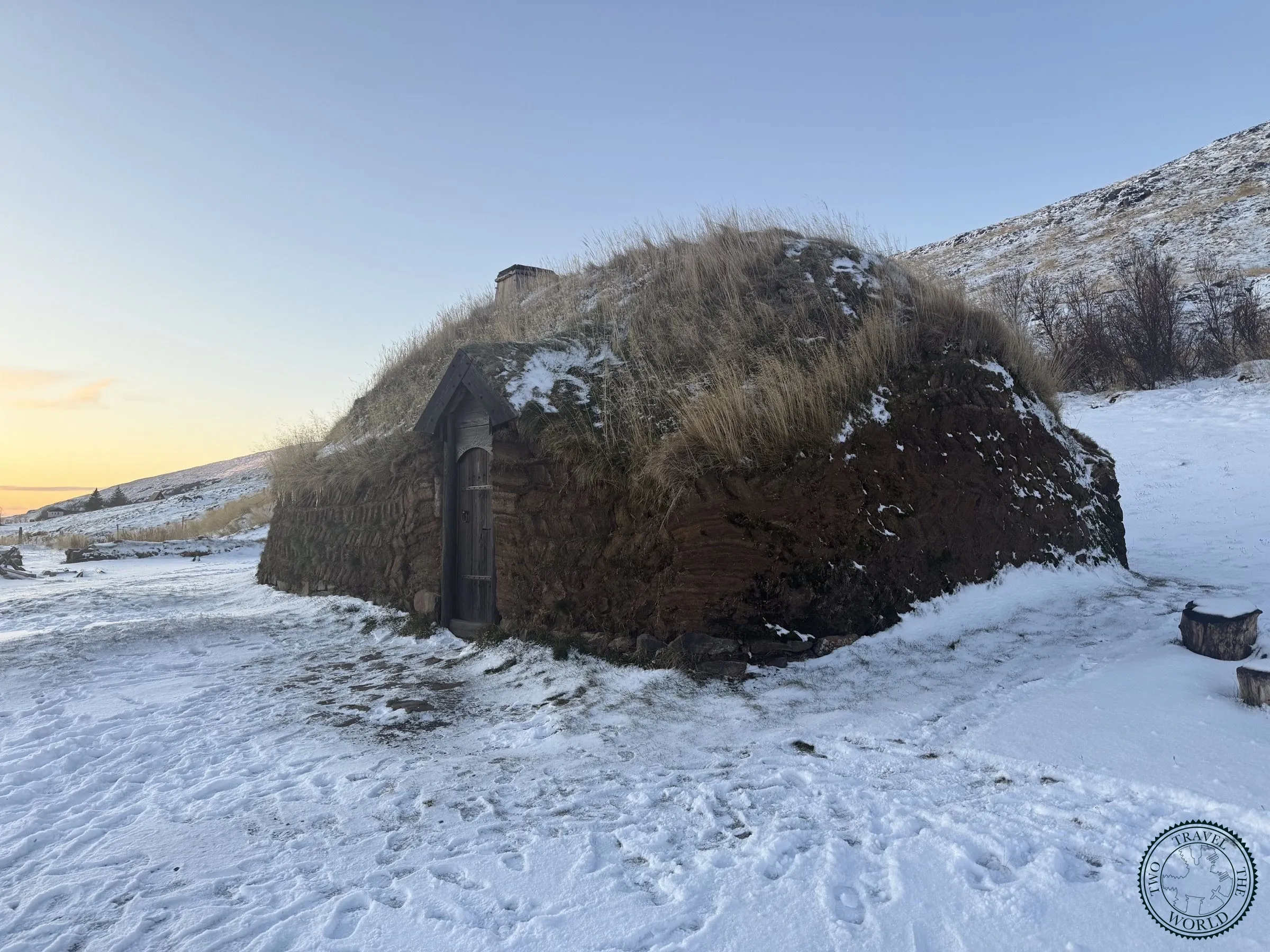
Eiríksstaðir Viking Museum
Eiríksstaðir is a reconstructed Viking longhouse in the Dalir region of West Iceland — the former homestead of Erik the Red and likely birthplace of his son Leif Eiríksson, the first known European to reach the Americas. A guide in period dress tells the sagas by an open fire.
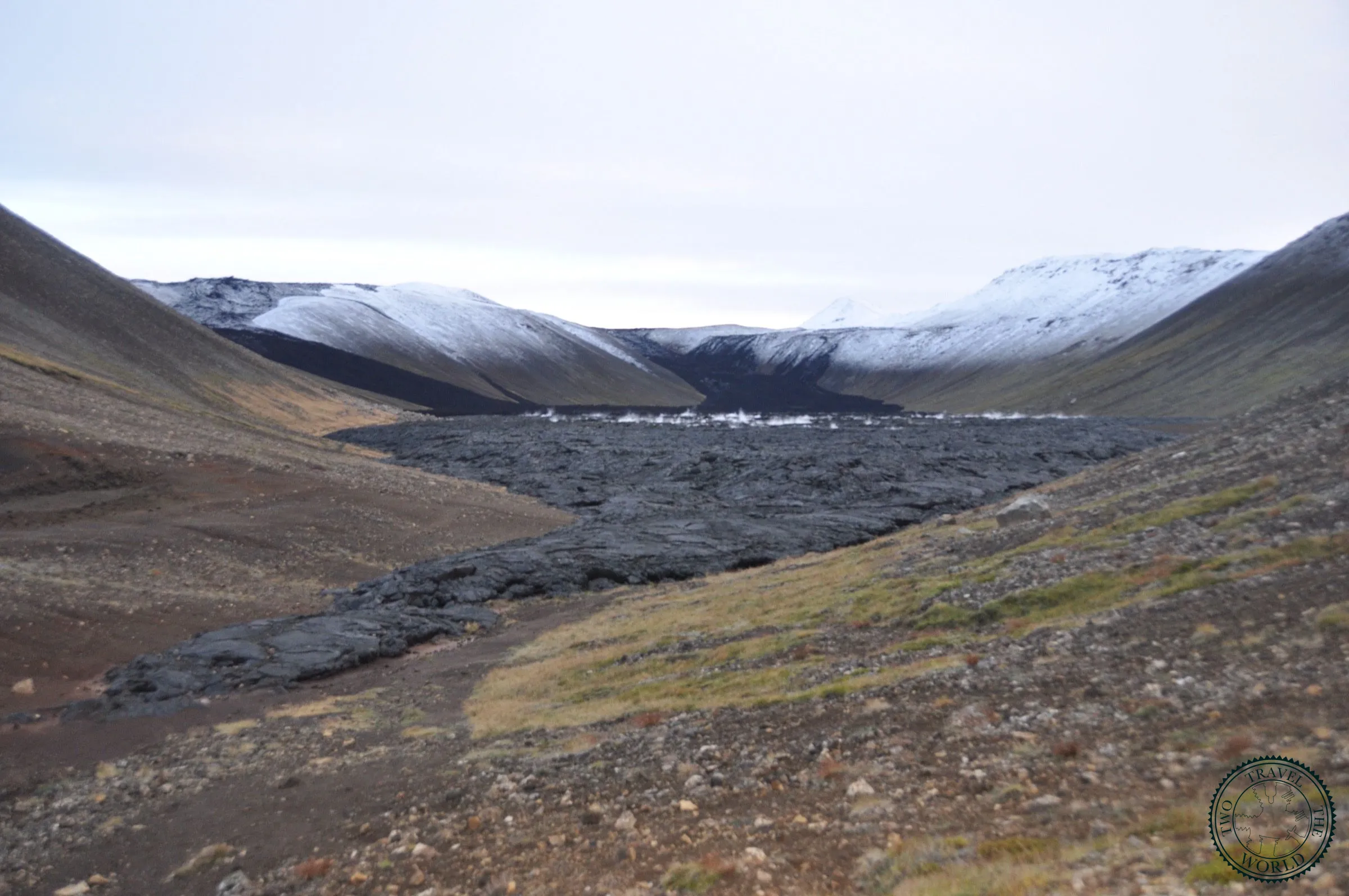
Fagradalsfjall Volcano Trail
The Reykjanes Peninsula eruptions reshaped this landscape between 2021 and 2025 — walking across still-warm lava fields with steam rising from cracks is about as close to another planet as you'll get without leaving Earth.
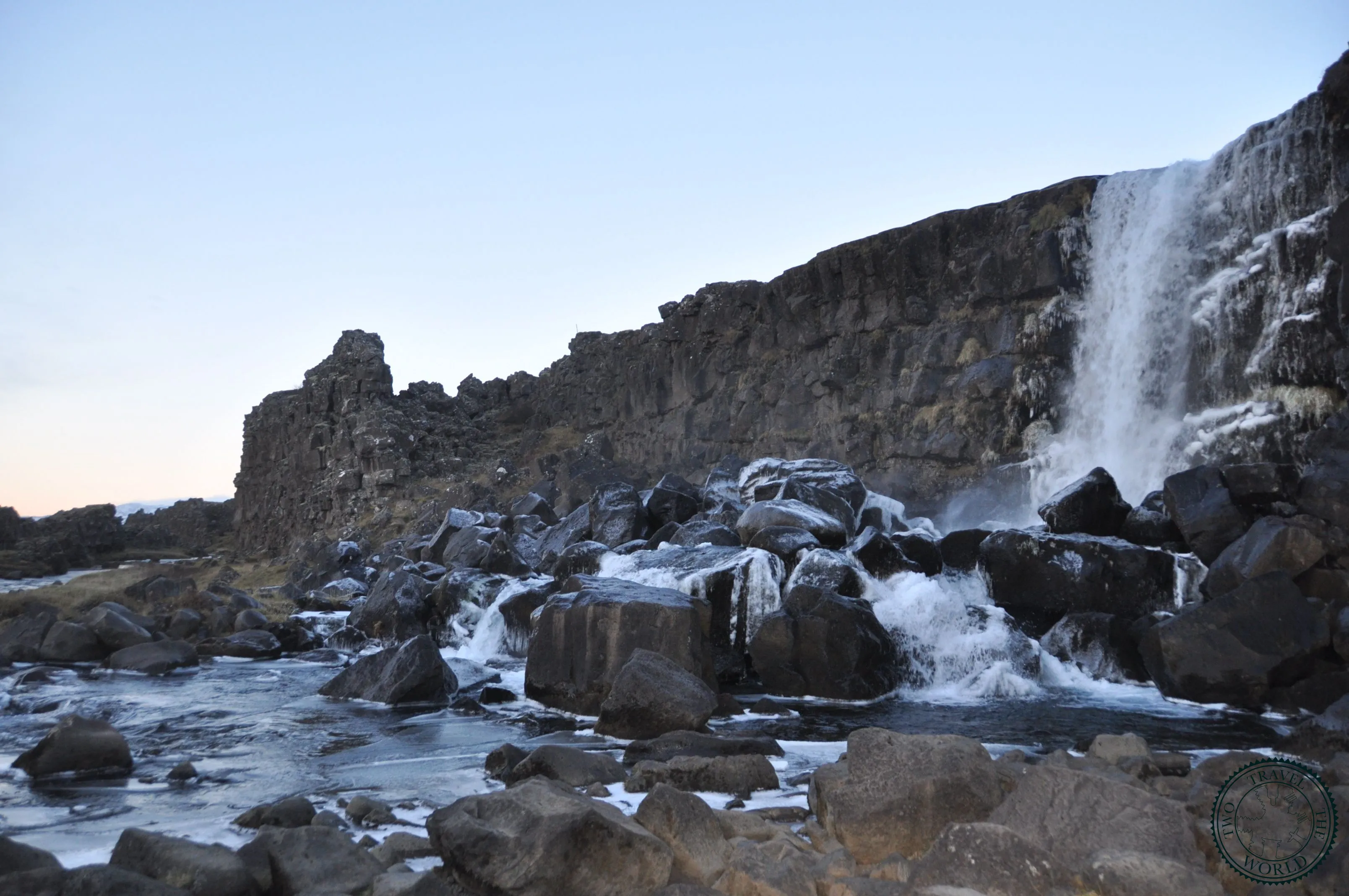
Öxarárfoss
Öxarárfoss drops 20 metres into the Almannagjá rift at Þingvellir National Park — a waterfall set literally between the North American and Eurasian tectonic plates, in the same gorge where Iceland's parliament was founded in 930 AD.

Promenade côtière d'Arnarstapi
Le sentier côtier entre Arnarstapi et Hellnar longe le bord de la péninsule de Snæfellsnes sur 2,5 km, passant devant des colonnes de basalte, des arches marines et des falaises à oiseaux. D'un côté, la statue d'un demi-troll veille sur le port. De l'autre, un petit café sert un ragoût de poisson avec vue sur l'océan.

Strokkur Geyser
Strokkur erupts every 5 to 10 minutes, launching a column of boiling water up to 30 metres into the air — it's Iceland's most reliable geothermal performance, and watching the bubble form and burst never gets old, no matter how many times you see it.