
Promenade côtière d'Arnarstapi
Falaises de basalte, arches marines et un gardien mi-troll sur la péninsule de Snæfellsnes
Infos pratiques
- Juin–août pour les macareux et la lumière quasi permanente ; printemps et automne plus calmes
- Accès gratuit — pas de droit d'entrée ; parking et toilettes publics au port d'Arnarstapi
- 2h30 depuis Reykjavík via la Route 1 puis la Route 54 ; pas de transports en commun sur la péninsule
- Chaussures de marche robustes — la roche volcanique est irrégulière ; coupe-vent indispensable
- Le café Fjöruhúsið à Hellnar sert un ragoût de poisson et du pain frais avec vue sur l'océan ; ouvert d'avril à octobre
- Fulmars, mouettes tridactyles, sternes arctiques et macareux nichent sur les falaises d'avril à août
- Le sentier longe des falaises sans garde-corps sur la majeure partie de son tracé — reculez par vent fort
- En hiver : praticable mais jours courts, café fermé, sentier parfois verglacé ; les mers agitées sont saisissantes
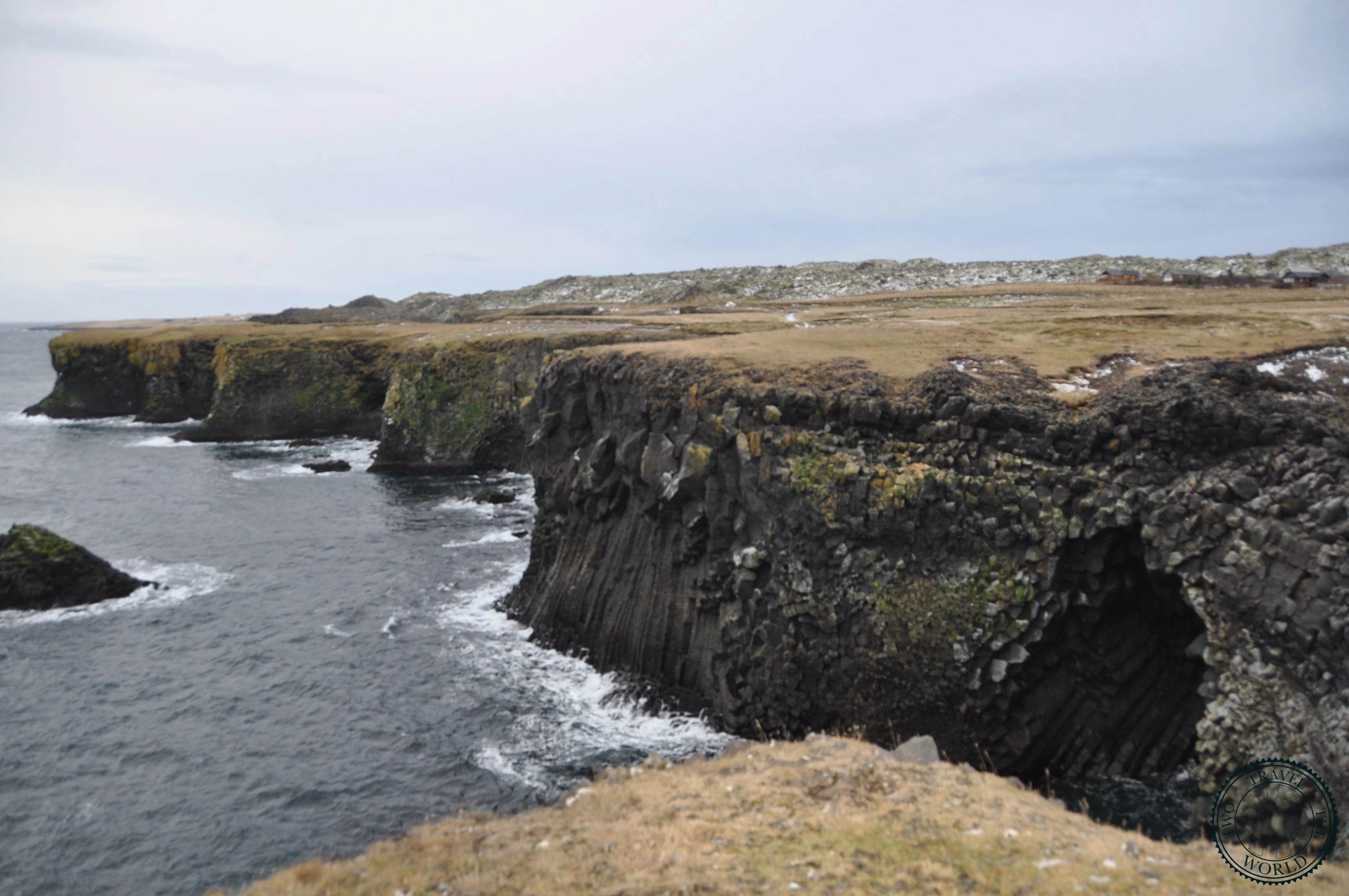
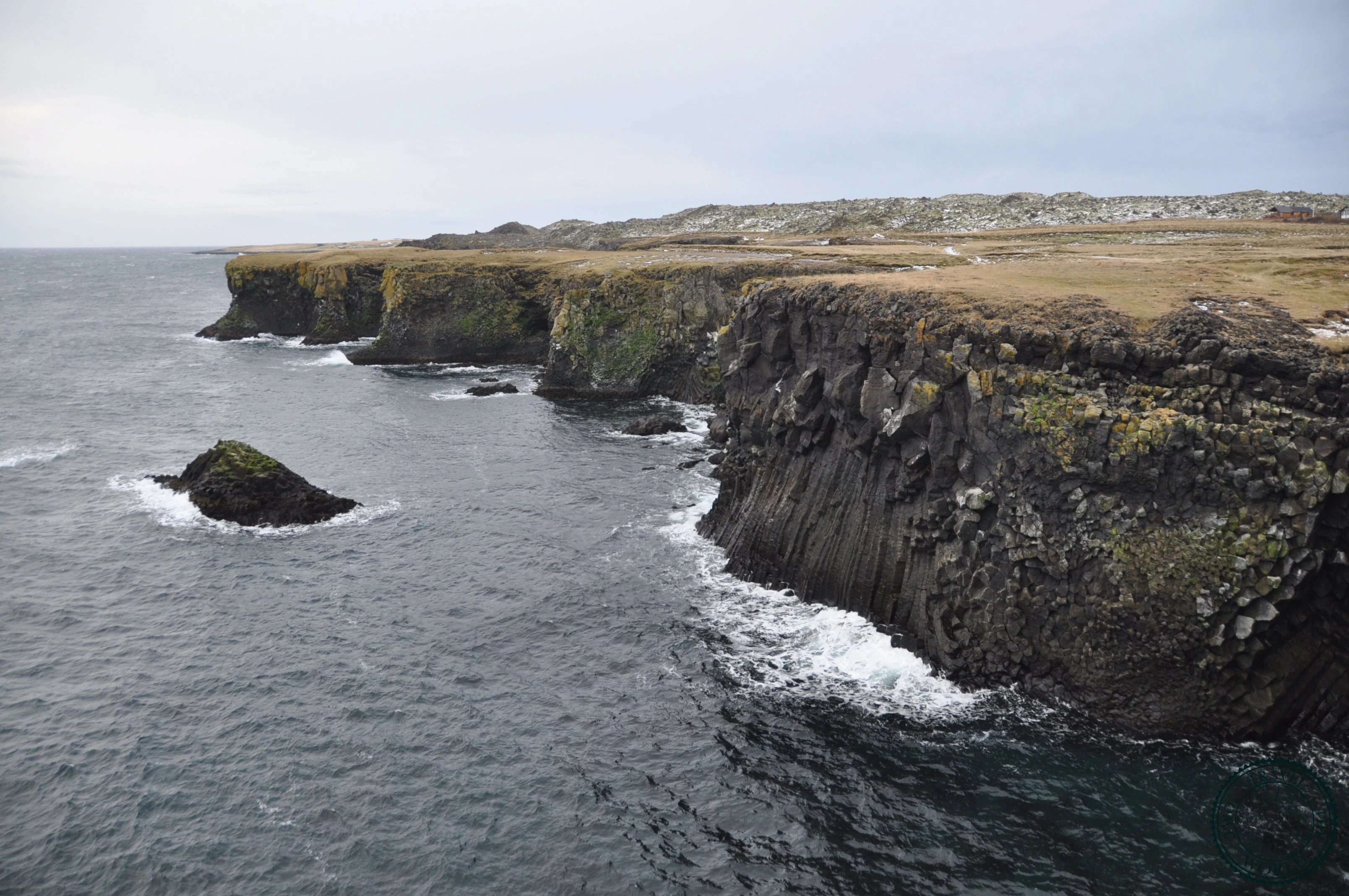
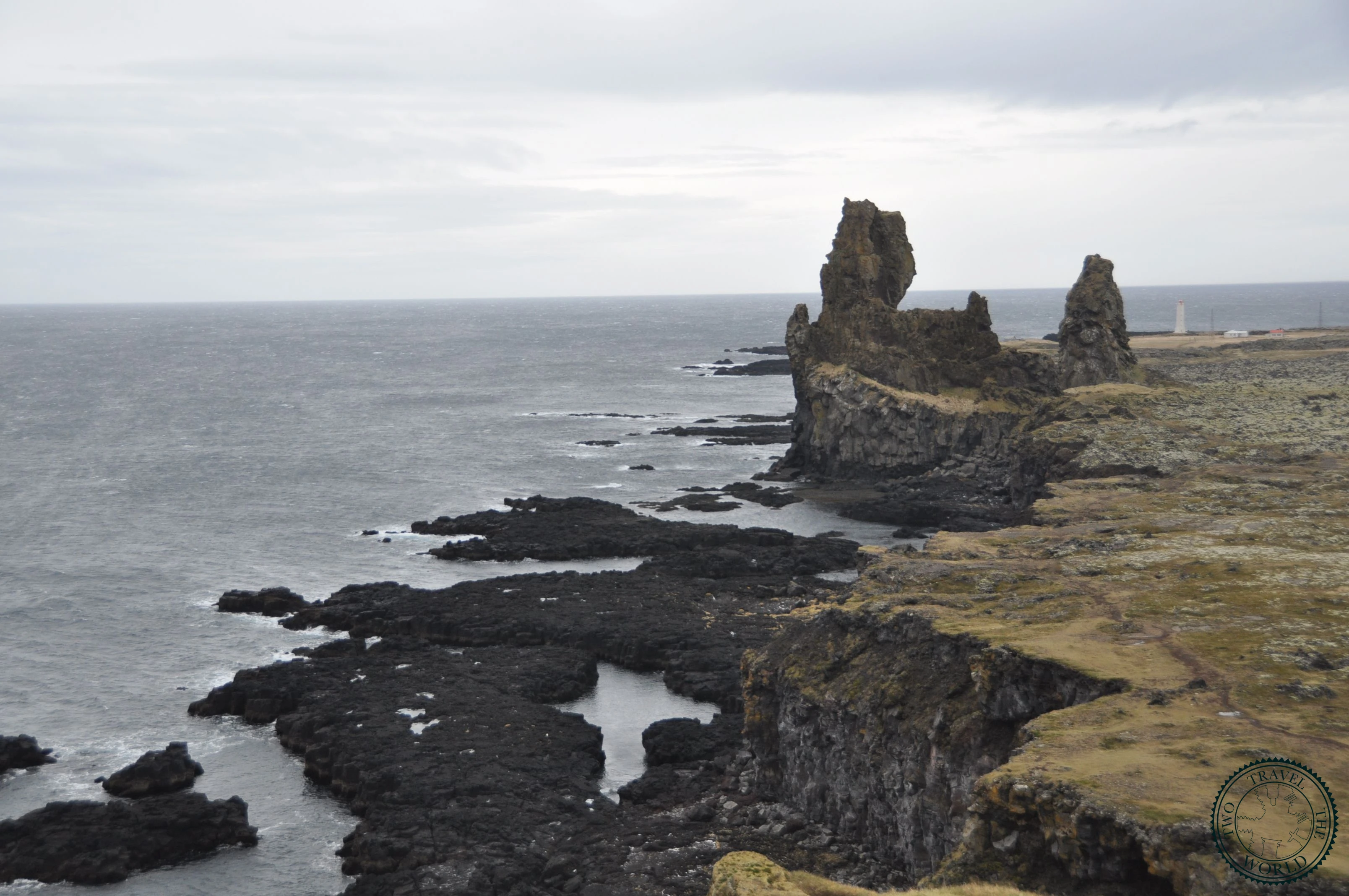
Les 2,5 km entre Arnarstapi et Hellnar traversent une géologie parmi les plus compactes d'Islande — du basalte en colonnes façonné par l'Atlantique en arches, grottes et formations qui tiennent à la fois de la cathédrale et de l'épave. On démarre au pied d'une statue de six mètres qui veille sur le port, et on termine dans un petit café aménagé dans une cabane de pêcheur, avec l'océan visible par toutes les fenêtres.
Le sentier en bord de falaise
Le village d'Arnarstapi s'étire sur la côte sud de Snæfellsnes, directement sous le glacier Snæfellsjökull. Port de commerce sous contrôle danois à partir de 1565, il comptait une centaine et demie d'habitants à son apogée au début du XVIIIe siècle — remarquable pour un lieu qui n'a aujourd'hui qu'une poignée de maisons, un port et un parking. Ce qu'il possède en revanche, c'est l'un des rares abris naturels sur ce tronçon de côte islandaise, et la géologie qui en est à l'origine est la même qui rend cette randonnée si particulière.
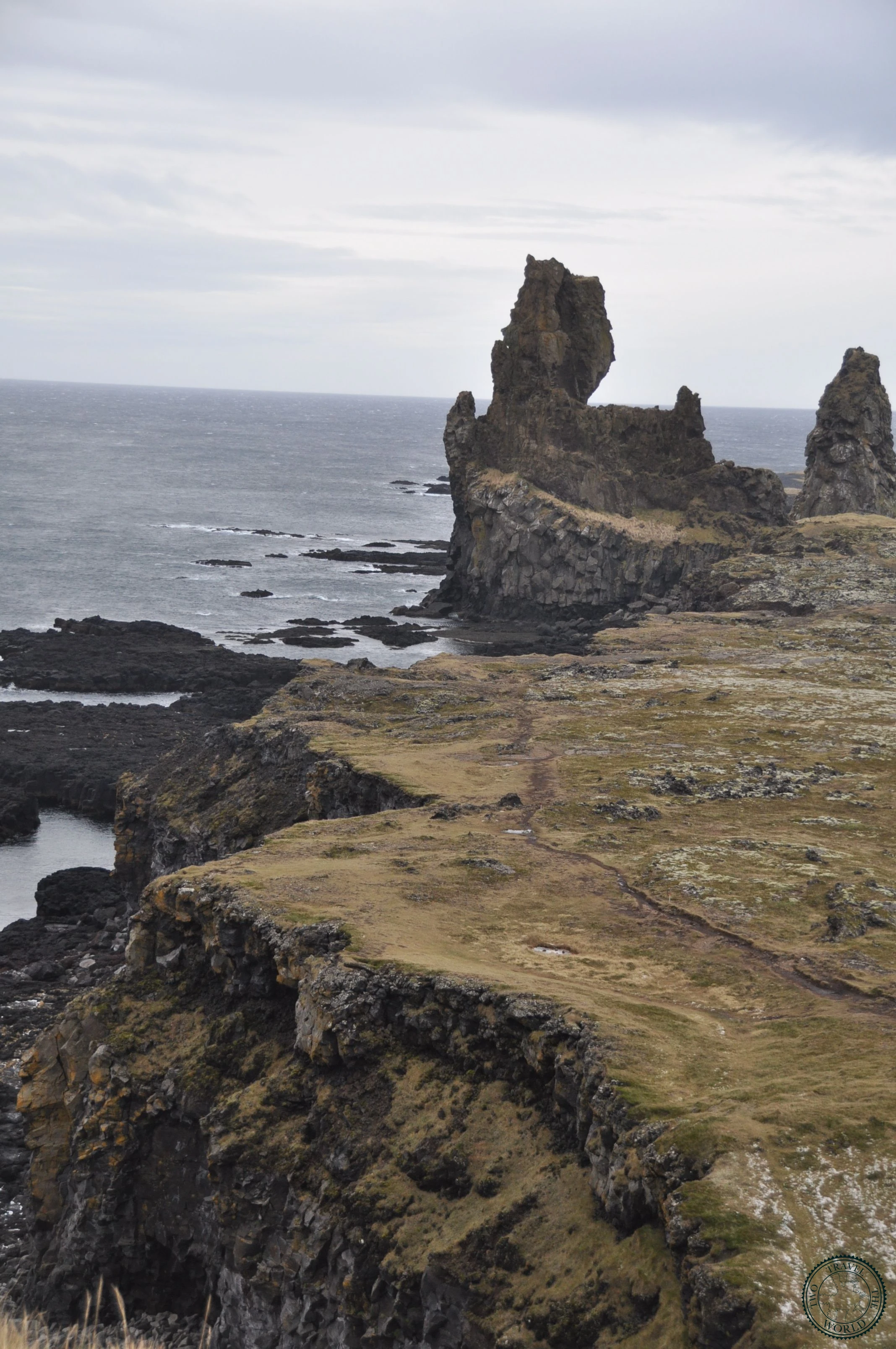
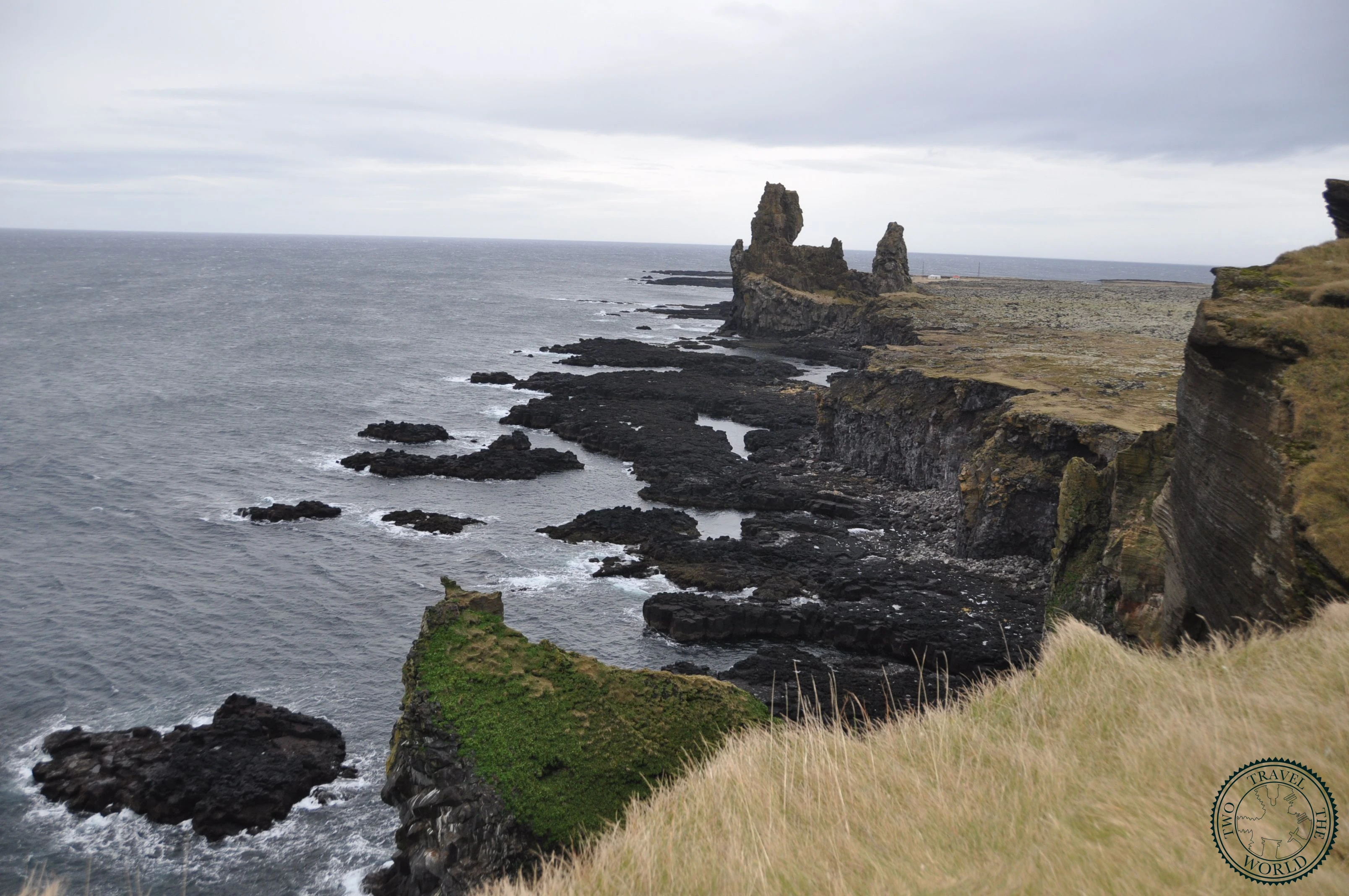
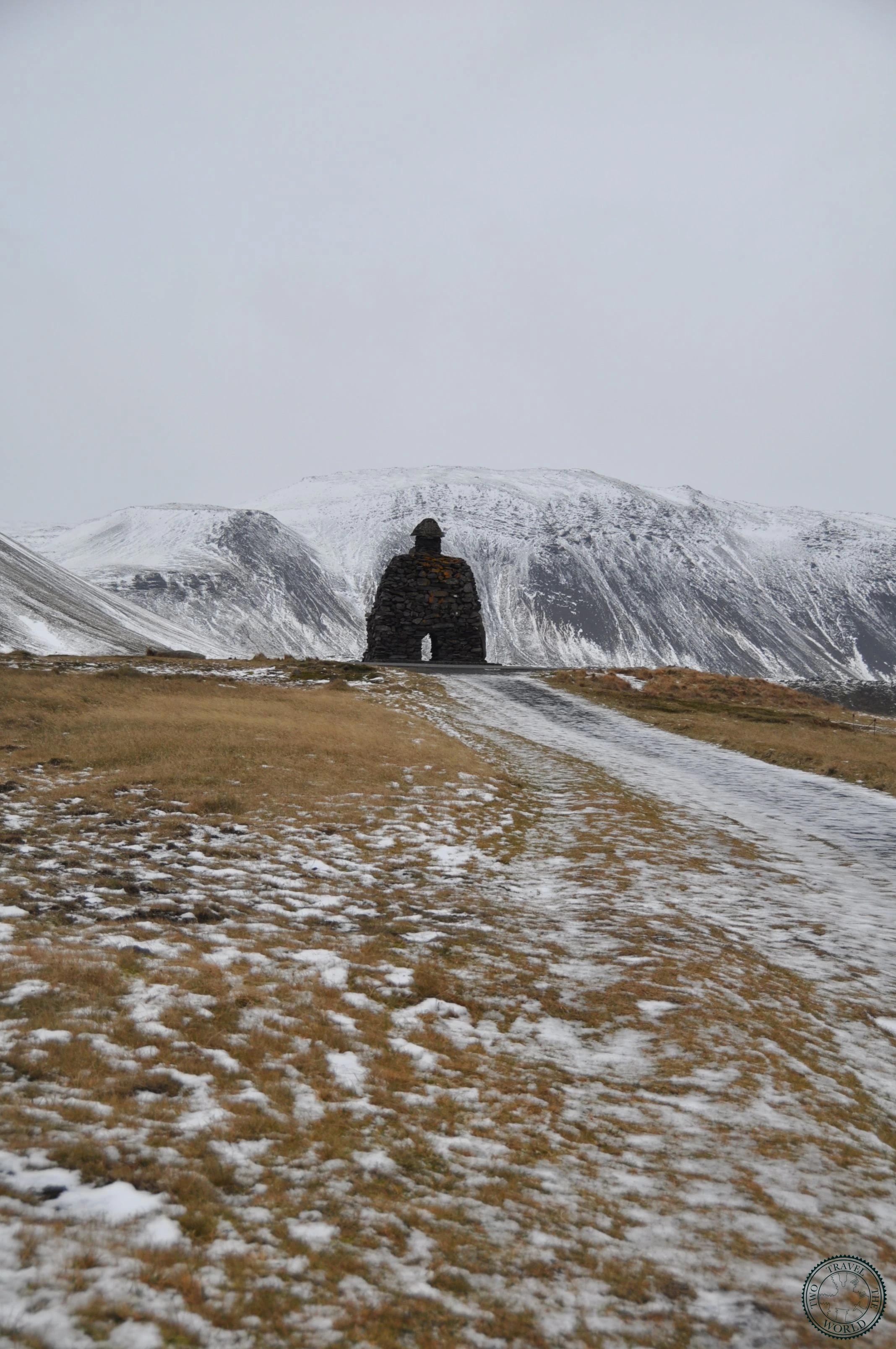
Le sentier part de la statue de Bárður Snæfellsás et file vers le sud le long de la falaise en direction de Hellnar. Il est bien balisé et globalement plat, avec le glacier dans le dos et l'Atlantique en contrebas. La moitié du tracé environ est aménagée ; le reste est une surface de lave rocheuse, suffisamment irrégulière pour se faire sentir sous les pieds. Il n'y a aucune barrière en bordure de falaise.
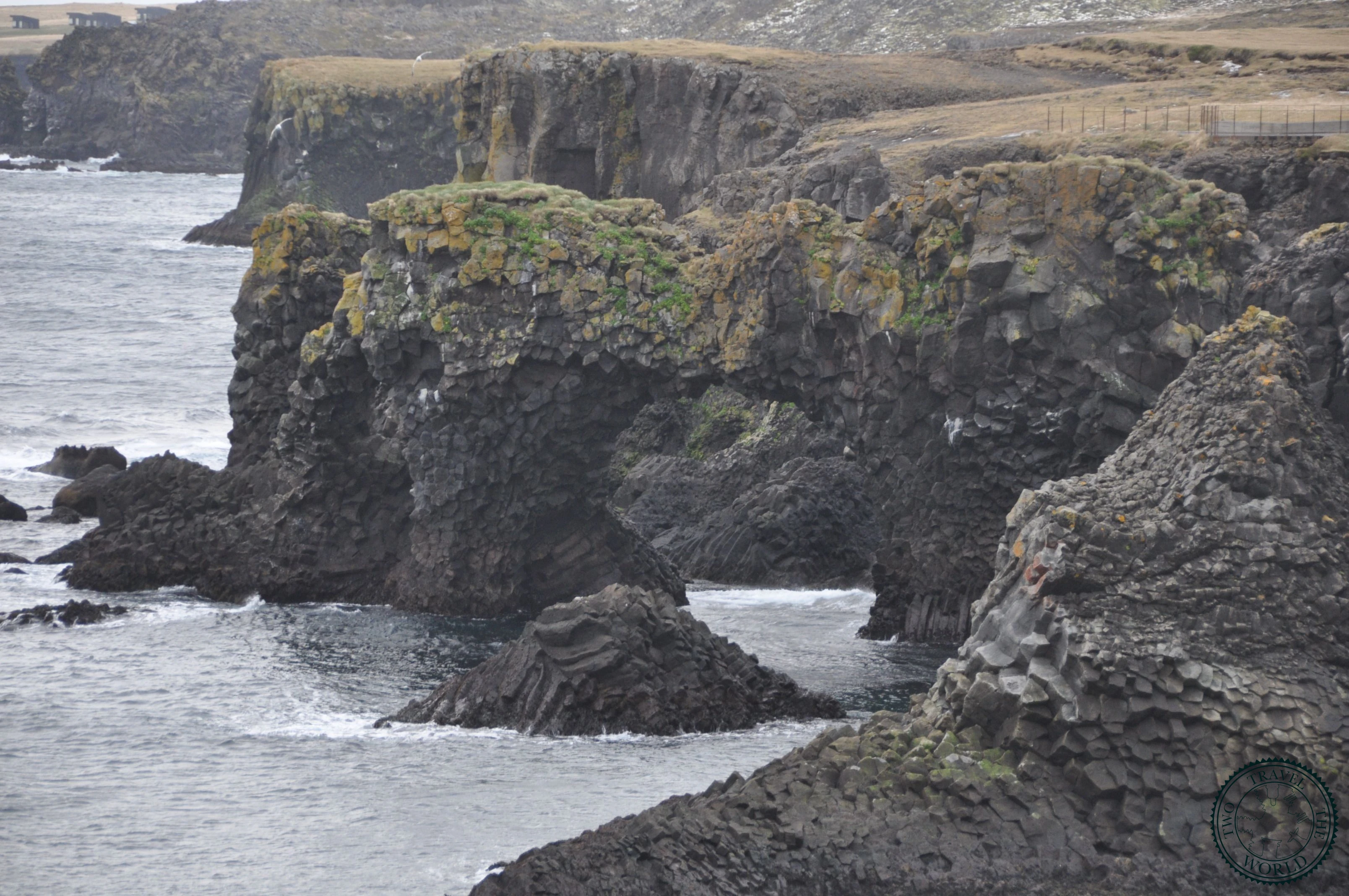
Gatklettur est l'arche de basalte qui attire tout le monde sur ce sentier. Les vagues de l'Atlantique ont rongé les sections les plus fragiles de la falaise volcanique pendant des millénaires ; la roche columnaire la plus résistante a tenu, le reste non. L'ouverture est assez grande pour encadrer une vue dégagée sur l'océan — des fulmars la traversent les jours calmes, des gerbes d'écume la percent les jours de tempête. Le sentier descend légèrement à l'approche de l'arche, juste assez pour voir l'eau de l'autre côté.


En été, les falaises entre Arnarstapi et Hellnar fourmillent d'oiseaux nicheurs — fulmars et mouettes tridactyles dans chaque fissure, sternes arctiques qui plongent au-dessus du sentier, macareux qui regagnent leurs terriers de mai à fin août. Par temps clair, le contraste entre le basalte noir, les embruns blancs et la mousse verte sur le versant intérieur de la lave arrête le regard.
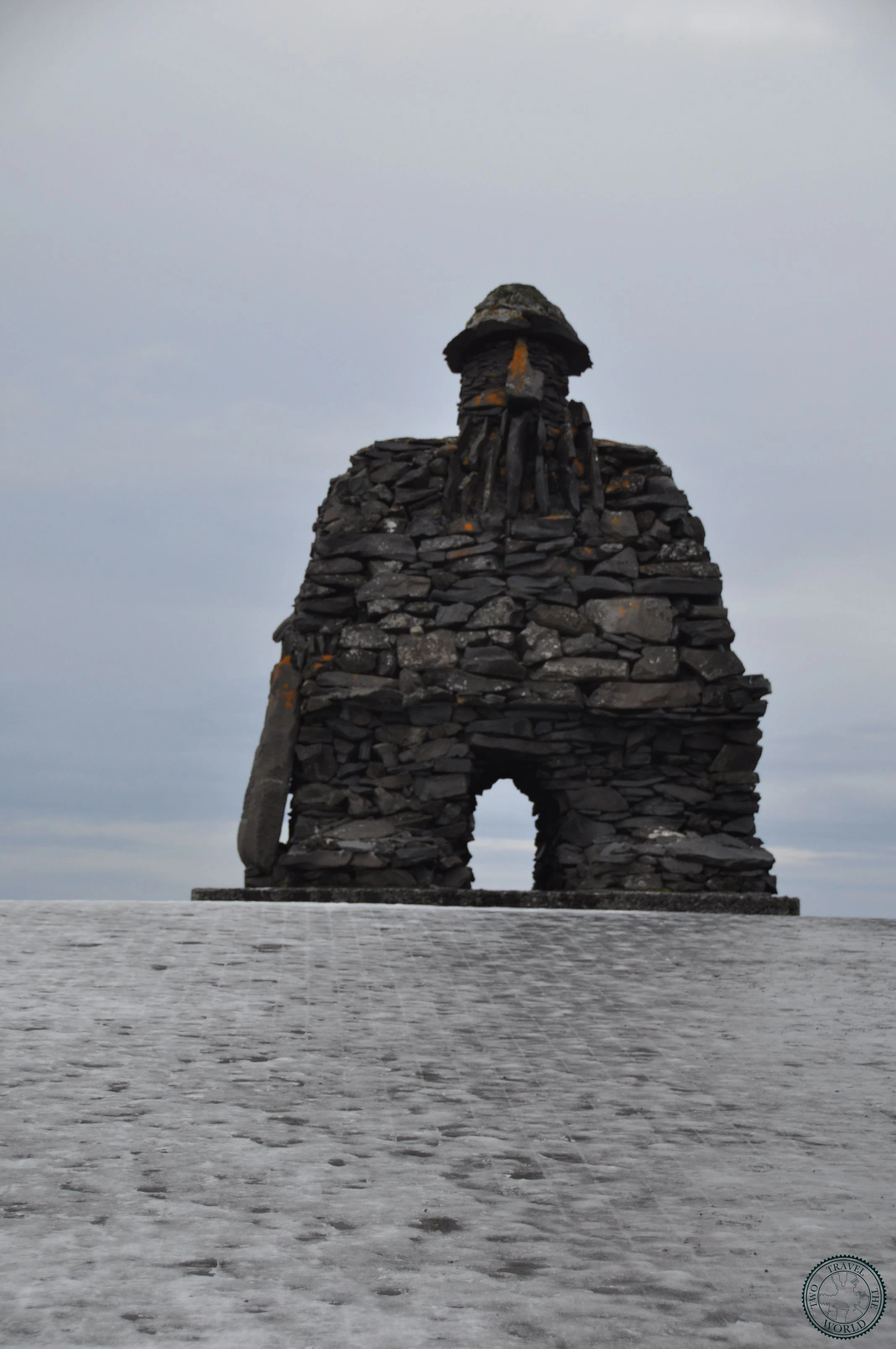
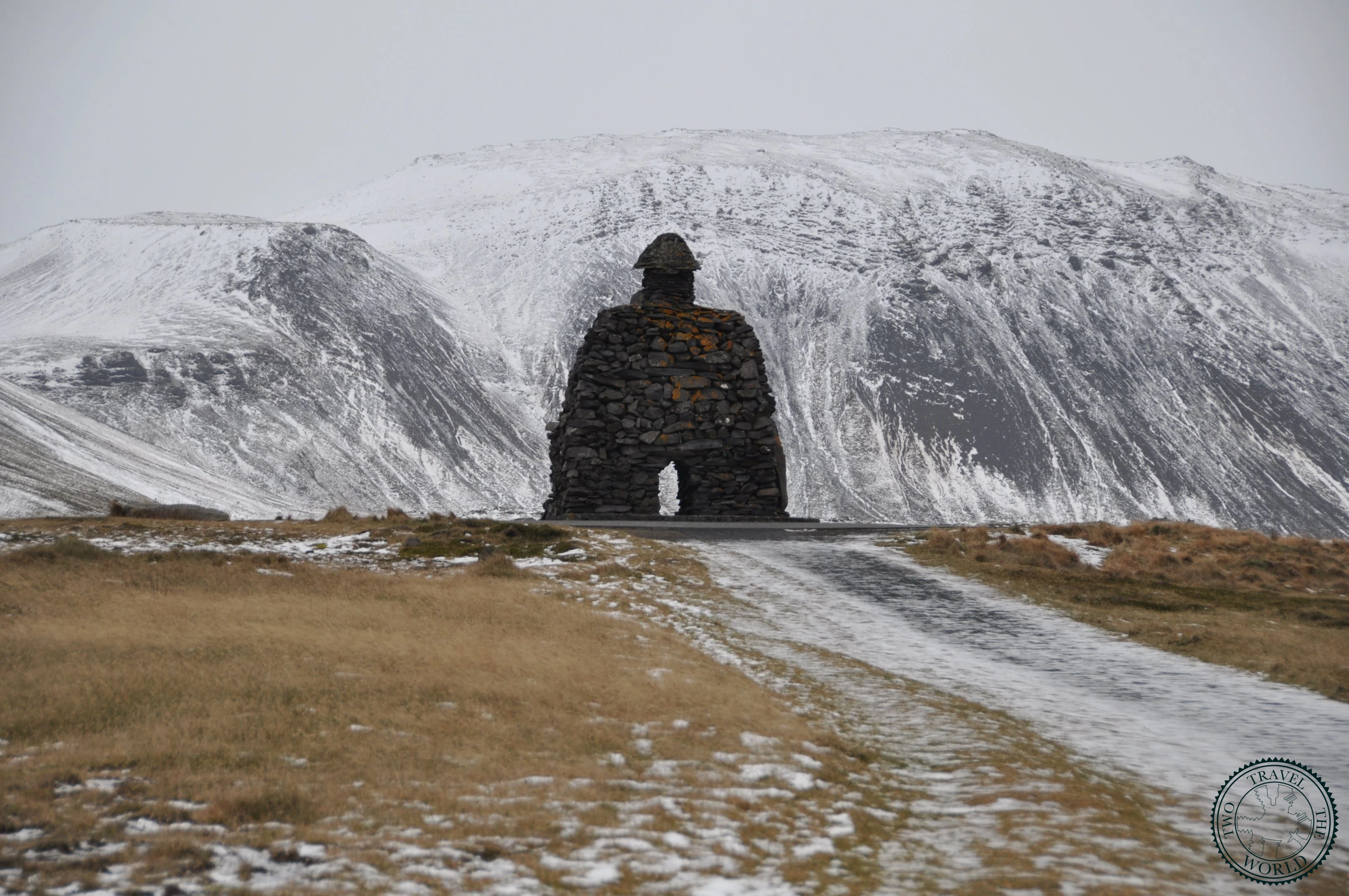
La statue au début du sentier mérite qu'on s'y arrête. Bárður Snæfellsás — mi-humain, mi-troll selon la saga rédigée au début du XIVe siècle — s'installa sur cette côte de Snæfellsnes après avoir fui la Norvège. Ce qui suit n'est pas une histoire confortable : lorsque son neveu poussa sa fille à la mer sur un iceberg, Bárður se vengea en jetant le neveu dans un ravin voisin et un autre du haut d'une falaise. Consumé par le chagrin, il abandonna ses terres et disparut dans le glacier Snæfellsjökull. Il devint l'esprit gardien de la péninsule — les habitants le priaient en temps de détresse pendant des siècles.
La statue, sculptée par Ragnar Kjartansson et dévoilée en 1978, s'élève à six mètres en basalte sombre, tenant une grande pierre. Elle n'est pas dans la subtilité, mais elle s'accorde au paysage. La silhouette regarde le même port qui servit de comptoir commercial danois pendant deux siècles, et les mêmes falaises où les nids de fulmars occupent aujourd'hui des fissures qui servaient autrefois à entreposer le poisson.
D'Arnarstapi à Hellnar, et retour
Le sentier longe des falaises sans garde-corps sur la quasi-totalité de son tracé. Le vent peut se lever brusquement même quand le temps semble calme à l'intérieur des terres — les rafales atlantiques sur cette côte sont assez puissantes pour être dangereuses en bord de falaise. S'il souffle fort, reculez bien. L'expression islandaise est juste : la mer ne négocie pas.
Arnarstapi → Hellnar
Le sentier aller longe la falaise vers le sud. On passe plusieurs points de vue avant d'atteindre Gatklettur — plus on approche, mieux on comprend l'échelle. Au-delà de l'arche, le chemin traverse des champs de lave jusqu'à la petite église de Hellnar. Le café Fjöruhúsið se trouve juste à côté, dans une ancienne cabane de pêcheur reconvertie, ouvert d'avril à octobre. Le ragoût de poisson est vraiment bon, et on peut s'asseoir en terrasse avec les vagues qui déferle à quelques mètres en dessous.
Le retour
La plupart des gens font le chemin inverse plutôt que d'organiser un transfert, et le retour en vaut la peine. Les vues sont différentes dans l'autre sens — le glacier est maintenant devant soi au lieu d'être dans le dos, la lumière frappe le basalte sous un autre angle, et on remarque des détails manqués à l'aller. L'aller-retour complet prend deux à trois heures à allure tranquille, pause à Gatklettur comprise.
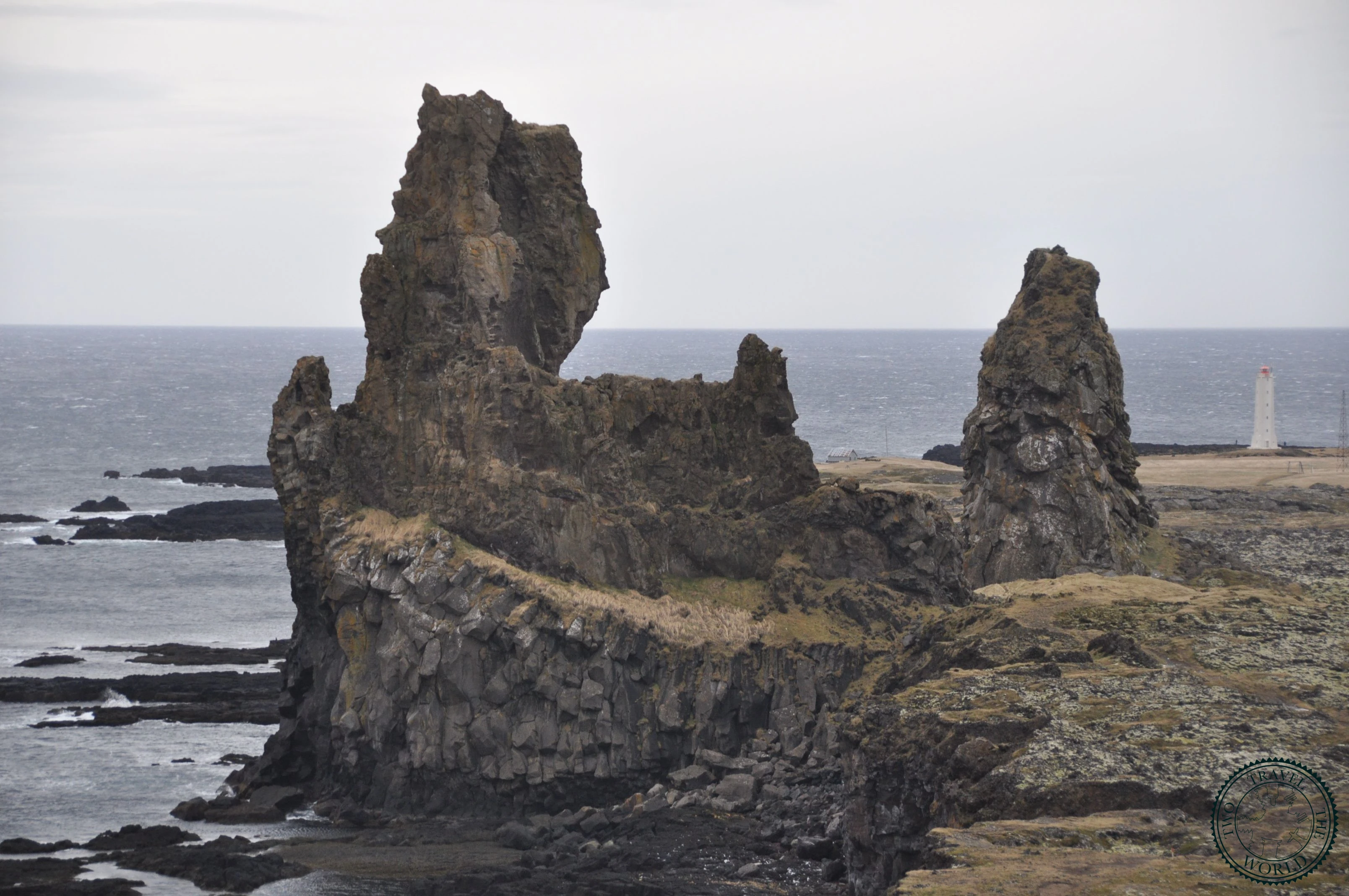

La randonnée est à son meilleur en juin et juillet, quand les falaises résonnent des cris des oiseaux et que la lumière ne disparaît presque pas. Mais l'hiver a ses raisons aussi. Le Fjöruhúsið est fermé, le jour est court — il reste la mer agitée, le sentier désert, le verglas sur la lave, le glacier blanc sur un ciel gris. Personne d'autre sur le chemin.
Le retour change la perspective. L'arche paraît différente de l'autre côté. Le glacier, qui était dans le dos tout le long du trajet, remplit maintenant le champ de vision devant.
Les vues sont différentes dans l'autre sens — le glacier occupe tout l'horizon et le basalte capte la lumière sous un angle complètement différent.
Photo Gallery




More Experiences in Reykjavik
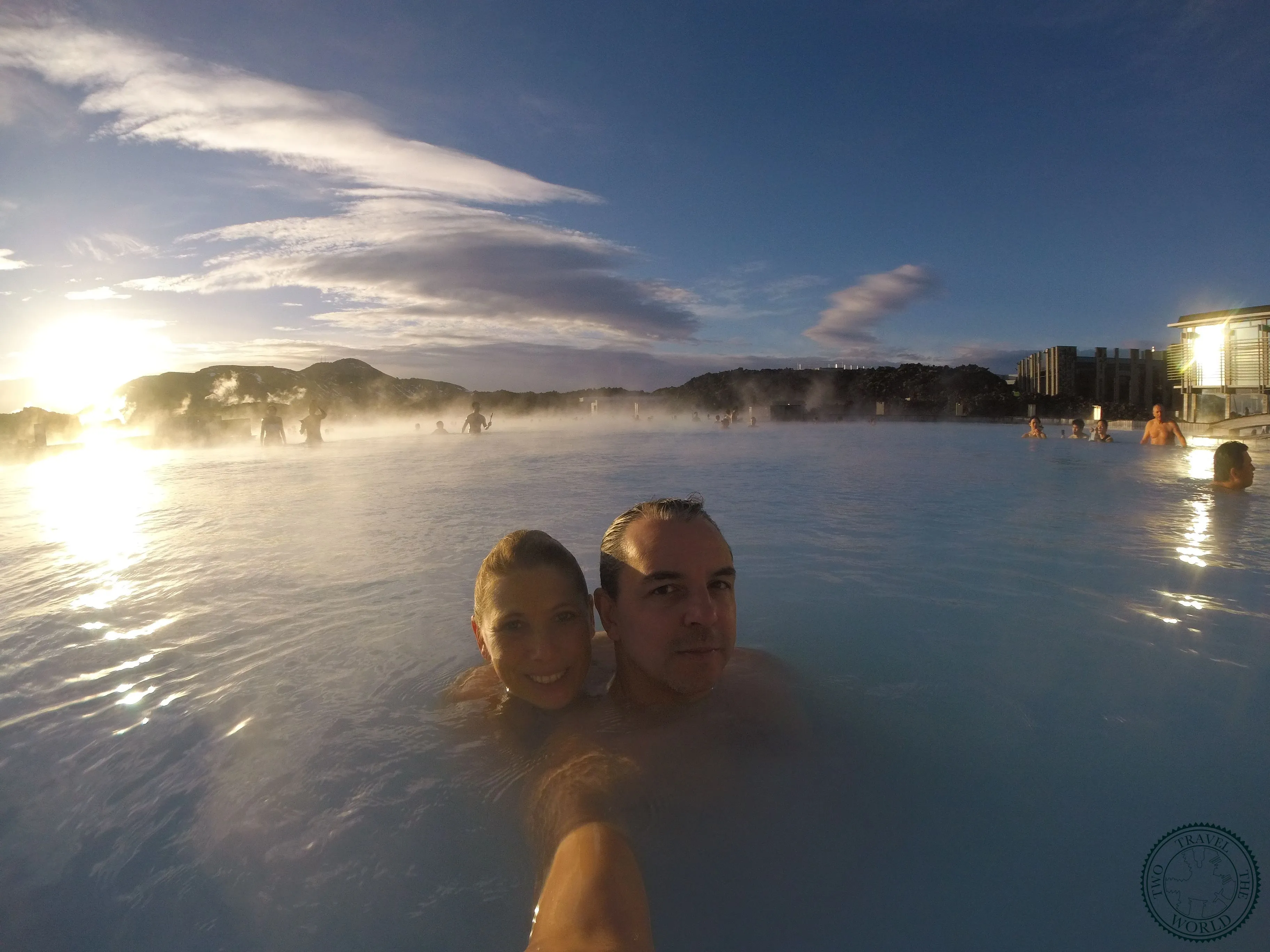
Blue Lagoon
We'll be honest — we went in sceptical about the hype and the price tag. But floating in milky-blue water surrounded by black lava rock at 8 AM, with steam rising into the cold air and hardly anyone else around, won us over.
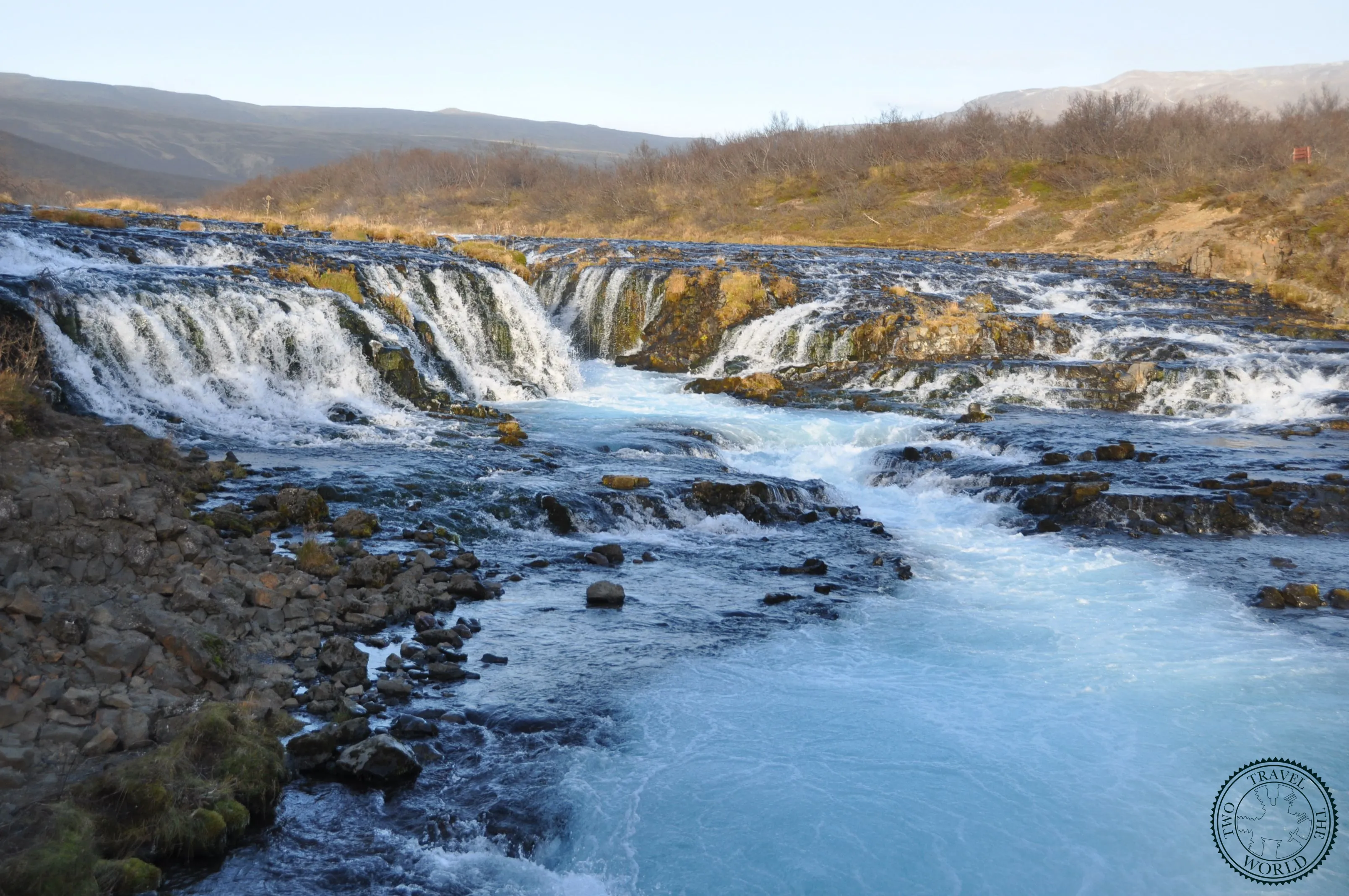
Brúarfoss
Brúarfoss might be the most vivid blue waterfall in Iceland — glacial meltwater from Langjökull filters through lava rock and emerges an almost unreal turquoise, cascading across a wide rocky shelf in a series of braided channels.
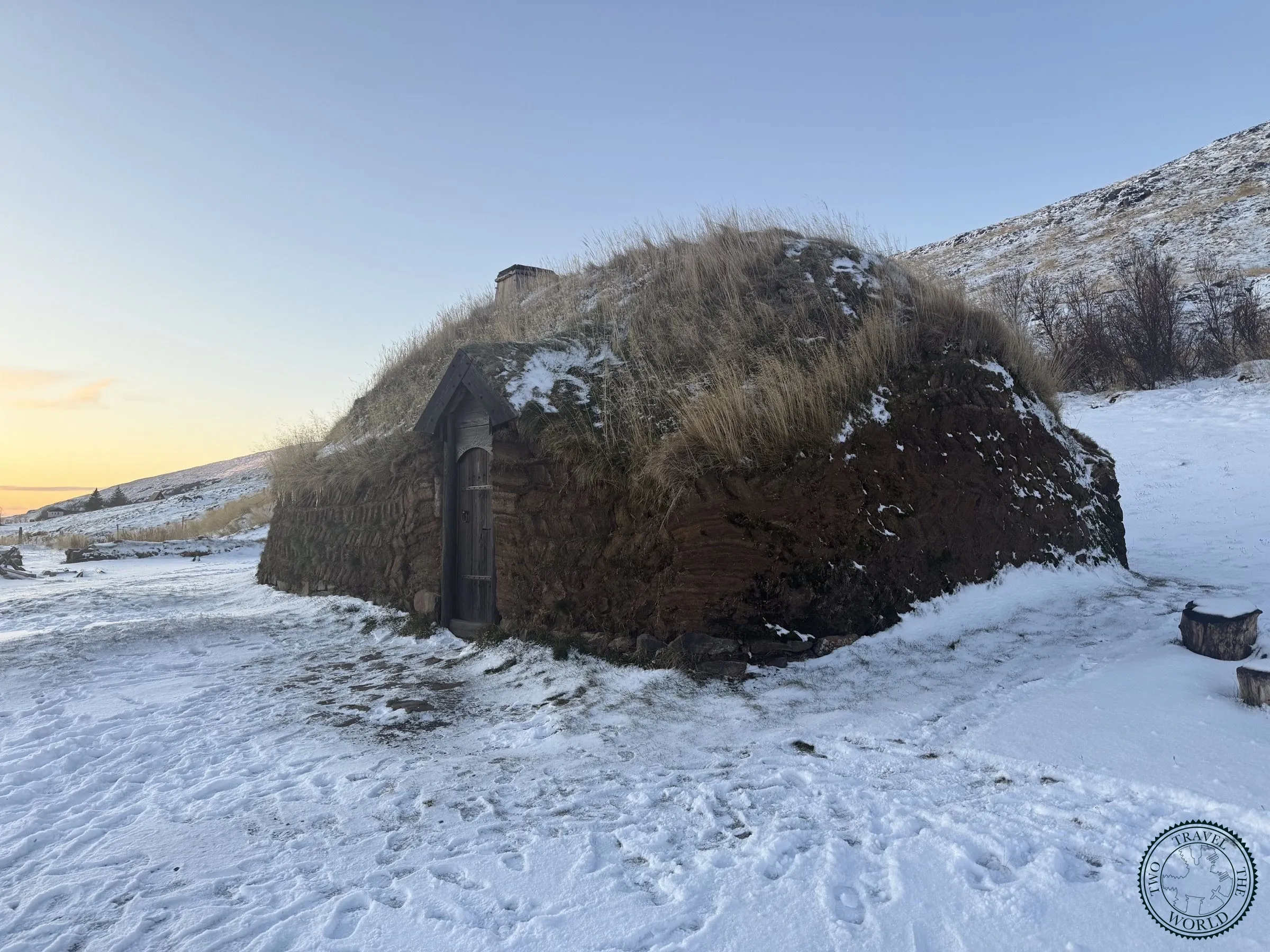
Eiríksstaðir Viking Museum
Eiríksstaðir is a reconstructed Viking longhouse in the Dalir region of West Iceland — the former homestead of Erik the Red and likely birthplace of his son Leif Eiríksson, the first known European to reach the Americas. A guide in period dress tells the sagas by an open fire.
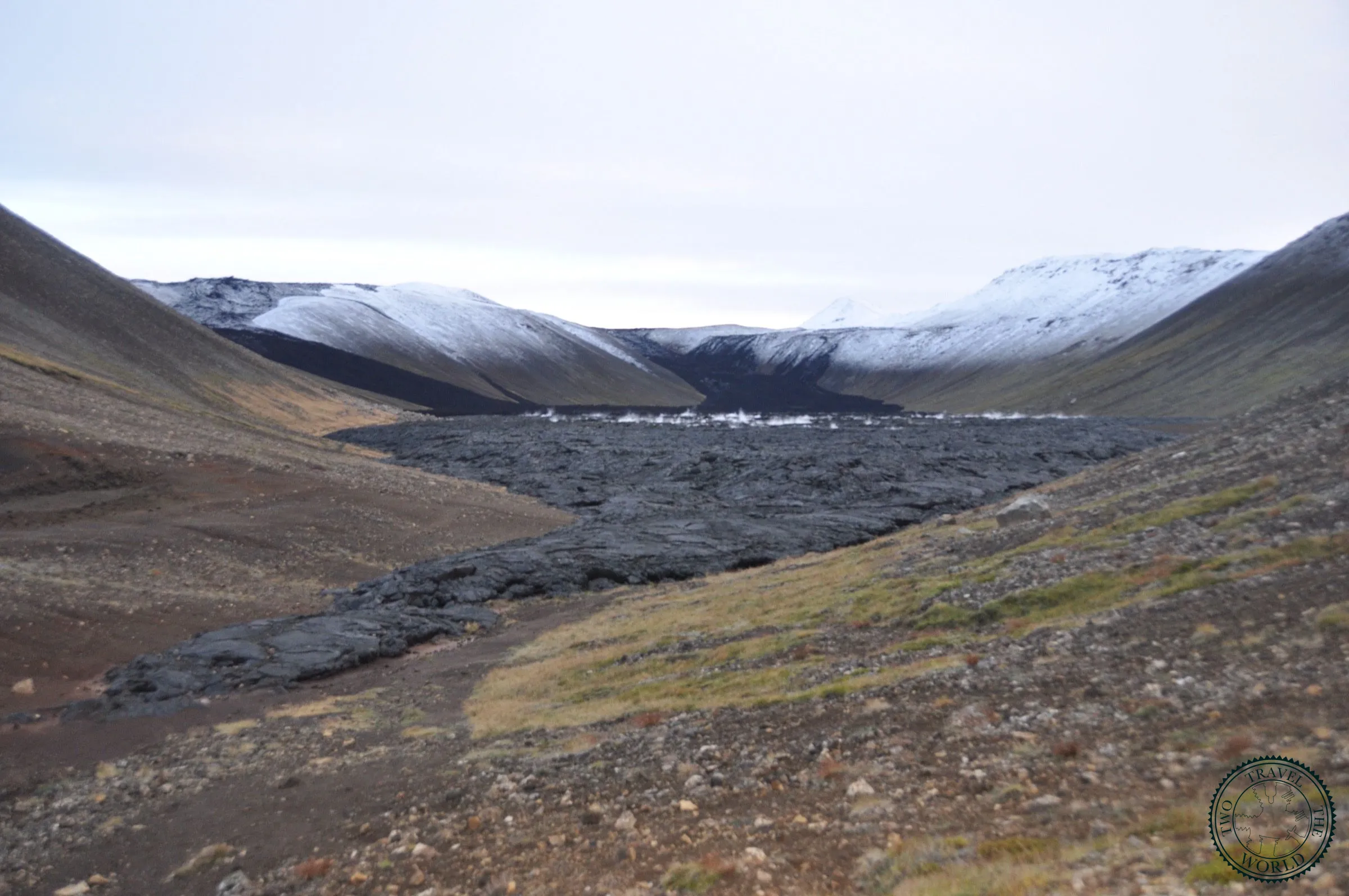
Fagradalsfjall Volcano Trail
The Reykjanes Peninsula eruptions reshaped this landscape between 2021 and 2025 — walking across still-warm lava fields with steam rising from cracks is about as close to another planet as you'll get without leaving Earth.
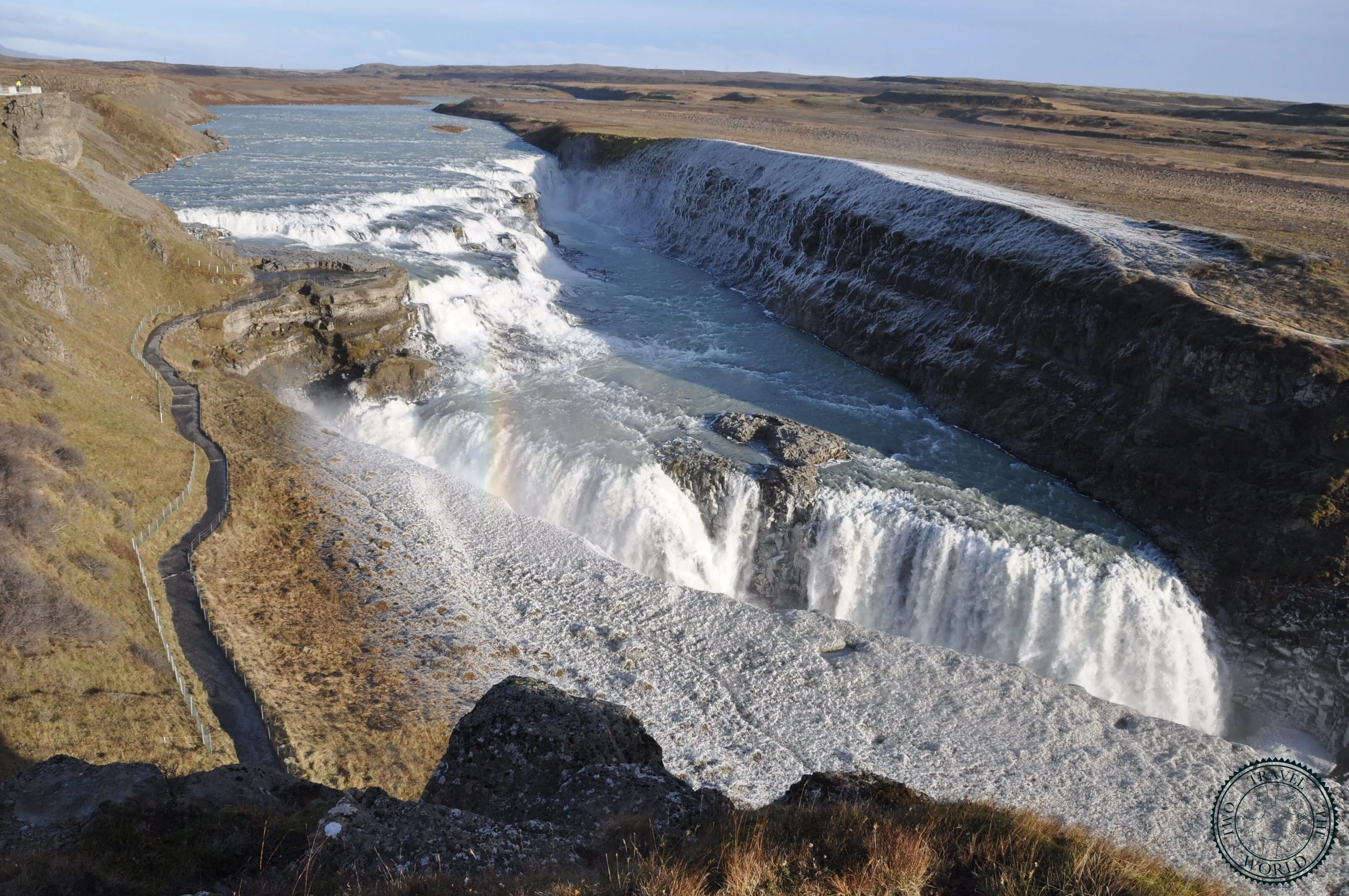
Gullfoss
Gullfoss chute de 32 mètres en deux étapes spectaculaires avant de disparaître dans un canyon étroit — placez-vous au point de vue inférieur et la puissance brute de la Hvítá vous frappe en pleine poitrine, avec une bonne dose d'embruns.
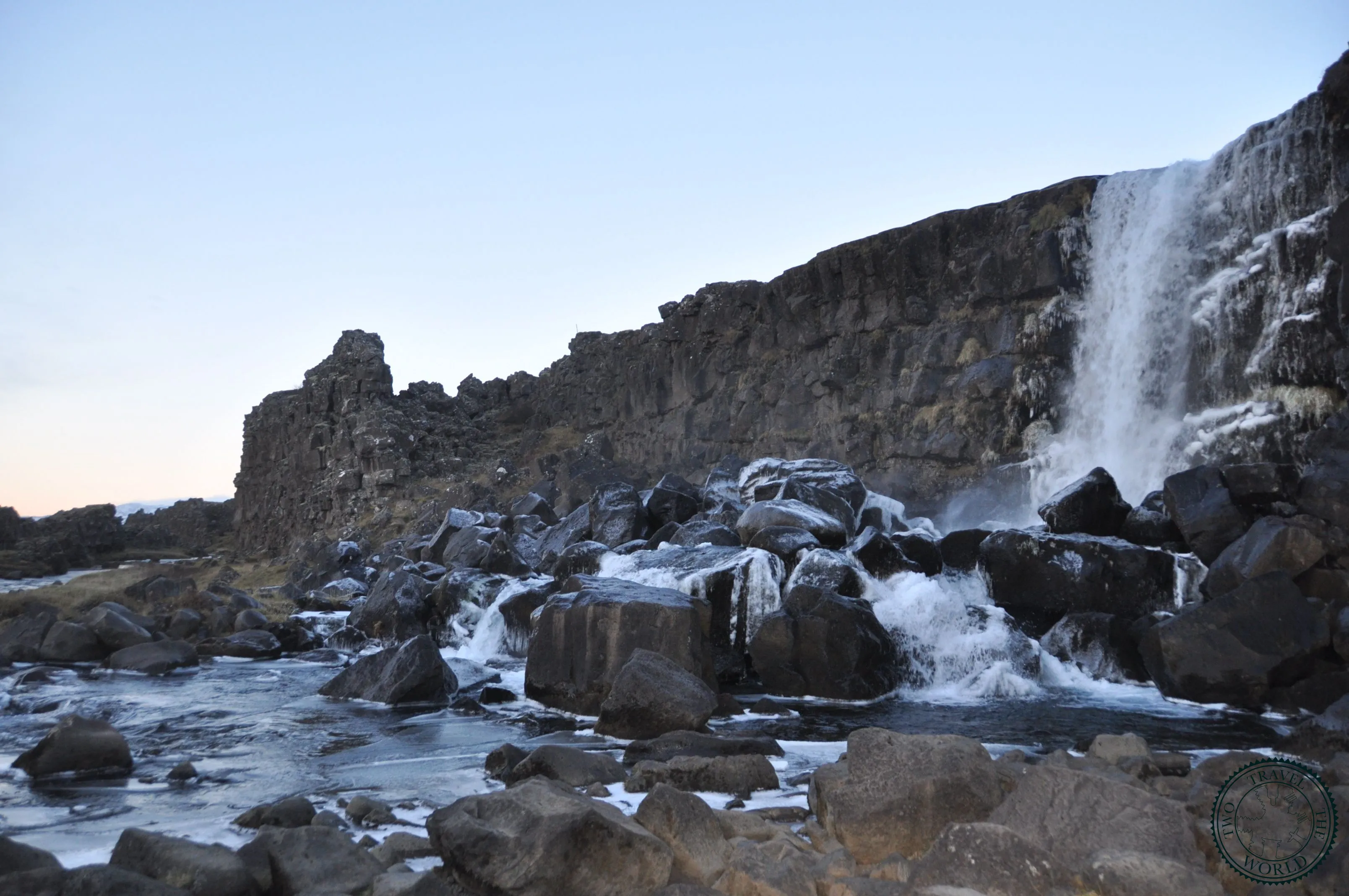
Öxarárfoss
Öxarárfoss drops 20 metres into the Almannagjá rift at Þingvellir National Park — a waterfall set literally between the North American and Eurasian tectonic plates, in the same gorge where Iceland's parliament was founded in 930 AD.

Strokkur Geyser
Strokkur erupts every 5 to 10 minutes, launching a column of boiling water up to 30 metres into the air — it's Iceland's most reliable geothermal performance, and watching the bubble form and burst never gets old, no matter how many times you see it.