Teotihuacan · mercredi 21 février 2018mer. 21 févr. 2018
Teotihuacan: Exploring the Ancient City of the Gods from Mexico City
We took a day trip to the ancient city and pyramids of Teotihuacan, the City of the Gods, climbing the third-largest pyramid in the world and walking the legendary Avenue of the Dead.
Texte DavidPhotos KroDay TripBusSunny and hot (30°C)Distance100 km$25.00UNESCO World Heritage · Ancient Pyramids · Pre-Columbian · Day Trip
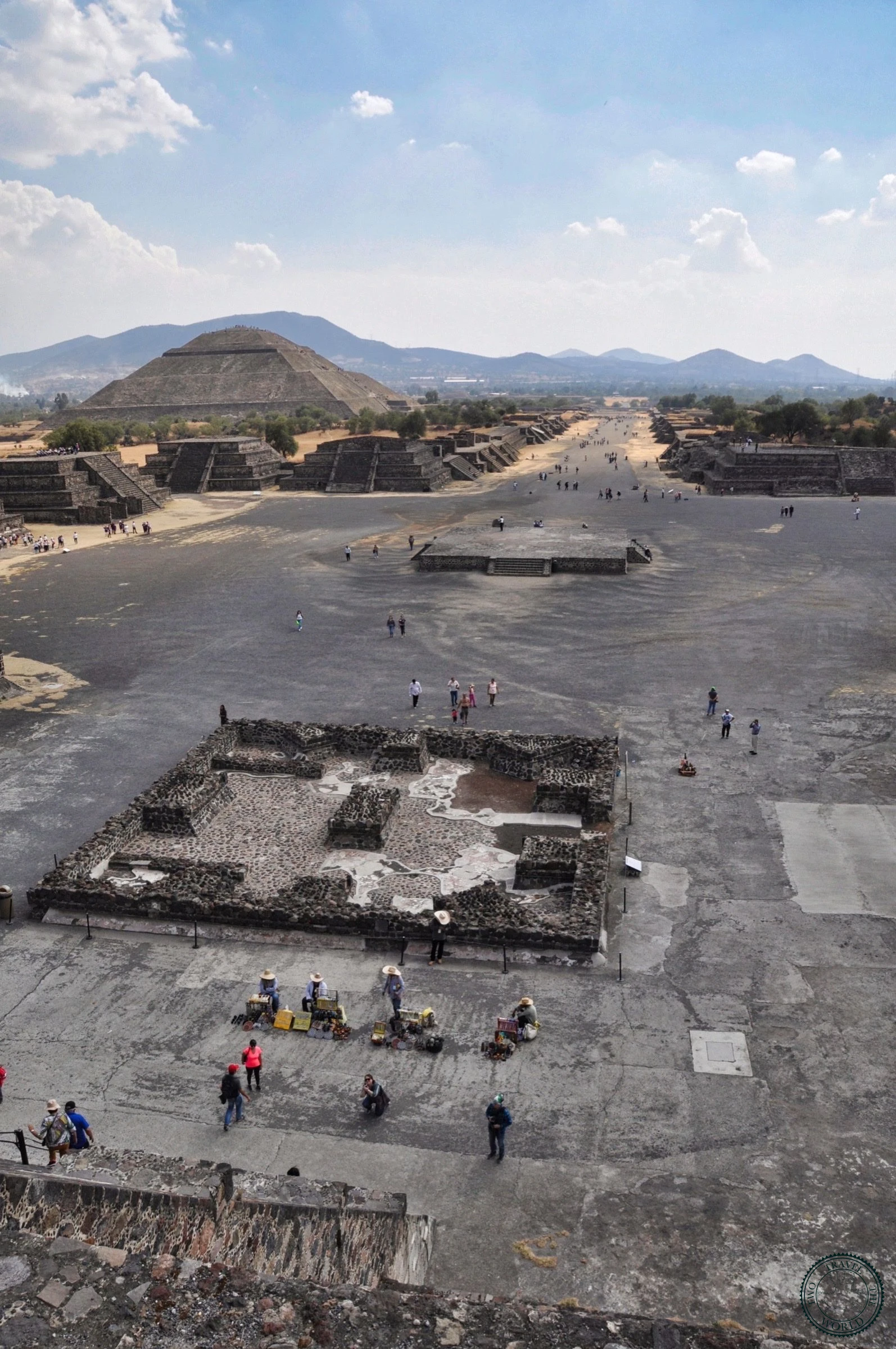
We took a day trip to the ancient city and pyramids of Teotihuacan, also known as the City of the Gods. The UNESCO World Heritage Site was located on the outskirts of the capital, about 30 miles northeast of Mexico City. The public transportation to this pre-Columbian city was comfortable, easy and cheap.
Getting to Teotihuacan from Mexico City
On the way to the pyramids, we had to visit the ADO office to buy our bus connections to Puebla, Oaxaca and San Miguel de Allende. The ADO website was pretty good but didn't support foreign credit cards. Therefore, a visit to their ticket booth in TAPO (Terminal de Autobuses de Pasajeros de Oriente) was a necessary stop.
After completing our duties, we hopped on the metro and got off at the station 'Terminal Central del Norte' (Line 5). We paid 104 pesos ($6 USD) for a round-trip bus ticket. The first bus departed at 6:00 AM and they left about every twenty minutes thereafter.
Before departure, an employee came aboard the bus to videotape each passenger's face. Weird! The same behavior also happened on the return journey where policemen accompanied the gentleman for another photo session. This is a security measure commonly used on Mexican buses.
The smooth journey to formerly Mesoamerica's greatest city took roughly an hour. Enough spare time to keep practicing our Spanish! The bus dropped us off by the main entrance (Puerta 1 / Gate 1). We bought our admission ticket at 70 pesos which also included entry to the museum. A few fellow passengers stayed on the bus to be dropped at Gates 2 and 3, which were closer to the main pyramids. We didn't mind walking and exploring the huge archaeological complex at our own pace.
Temple of the Feathered Serpent (Quetzalcóatl)

Upon arriving at Teotihuacan, we were impressed by the size of the complex. Our first sight was the Temple of the Feathered Serpent (Temple of Quetzalcóatl). Surrounded by an arid, flat and dusty area, the temple was the most preserved with its iconic carved serpent heads adorning the eastern side. The hundred sacrificial burials discovered here showed the importance of this religious center in ancient Mesoamerican culture.
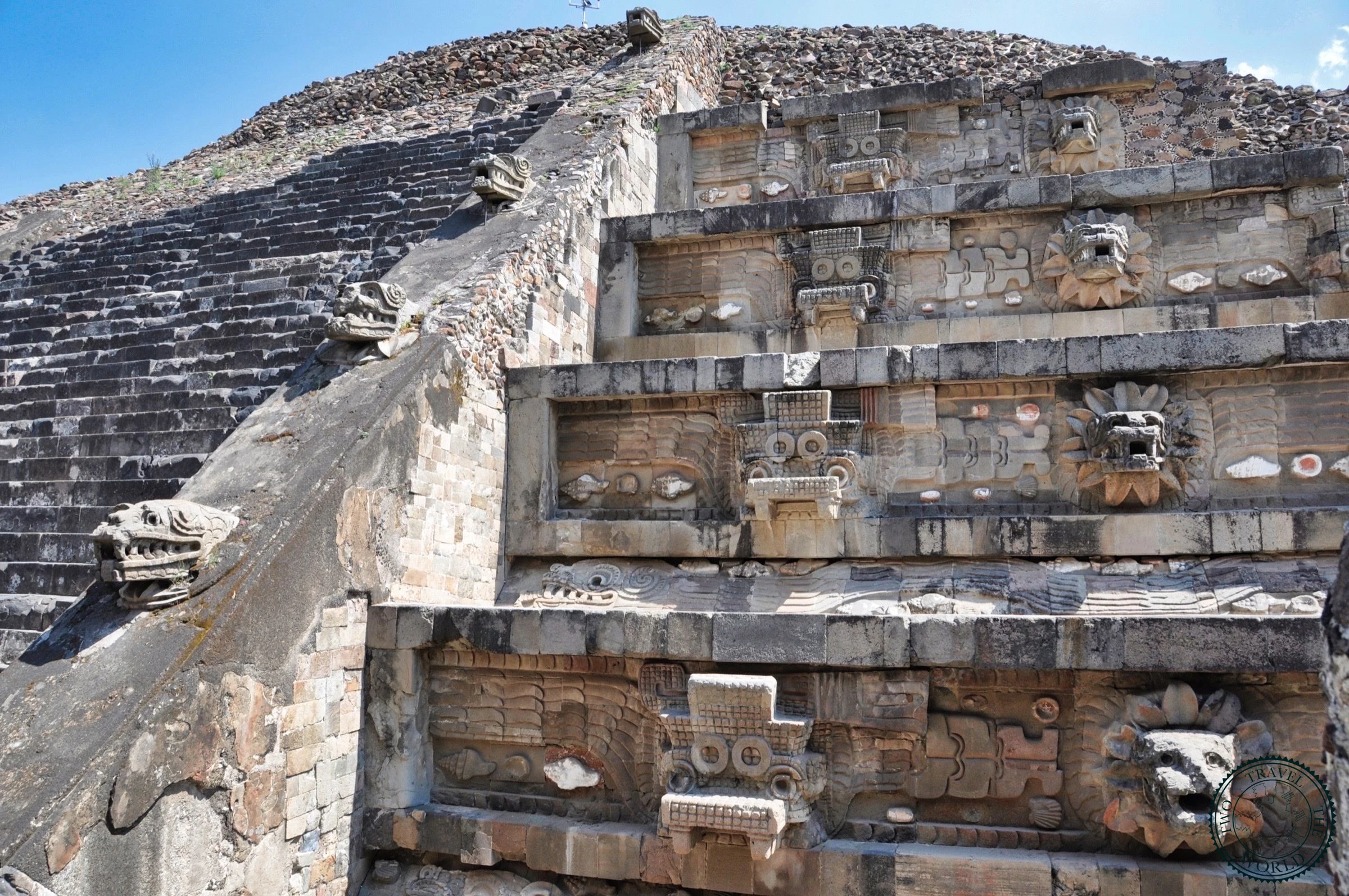
The intricate carvings feature alternating heads of the feathered serpent Quetzalcóatl and the fire serpent, surrounded by seashells and other aquatic symbols. This temple dates from around 200-250 AD and was once painted in vibrant colors.
Pyramid of the Sun: The Third Largest in the World
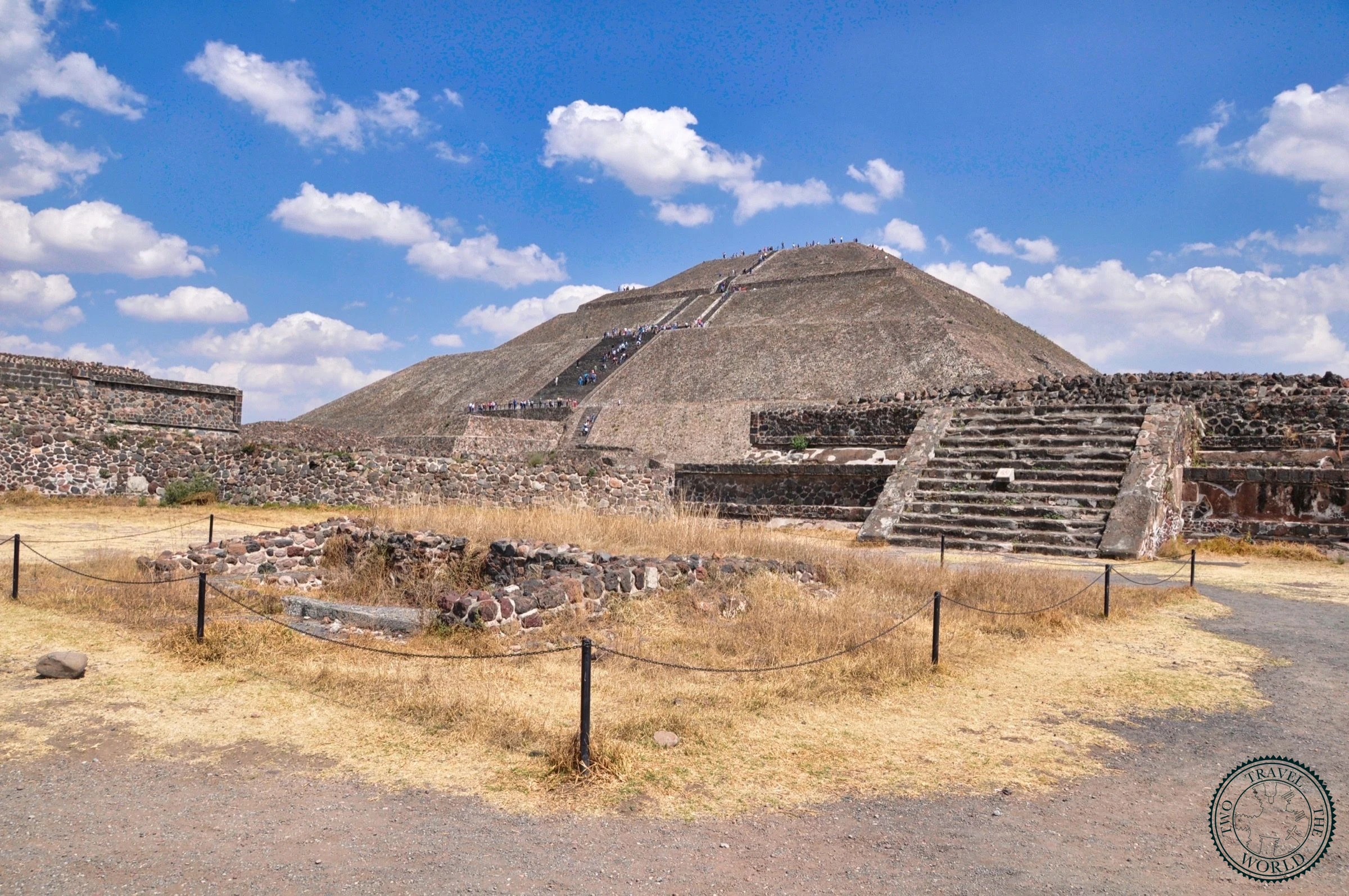
We strolled down the Avenue of the Dead to reach Pirámide del Sol (Pyramid of the Sun). We climbed all the way to the top of the third-largest pyramid in the world! After 248 steep and uneven steps, we were rewarded with a beautiful view of the Avenue of the Dead and the Pyramid of the Moon.

At 216 feet high (65 meters), the Pyramid of the Sun is an engineering marvel built around 200 AD. It contains over 1 million cubic meters of adobe bricks and earth without any interior rooms - it's completely solid! The climb is challenging, especially in the hot sun, but the panoramic views from the top are absolutely worth it.
Pyramid of the Moon and the Avenue of the Dead
We walked halfway up the Pyramid of the Moon as visitors weren't allowed to reach the summit. Still, we could see the entire site including the Pyramid of the Sun and the main street of Teotihuacan - the Avenue of the Dead - lined with many smaller temples and platforms.
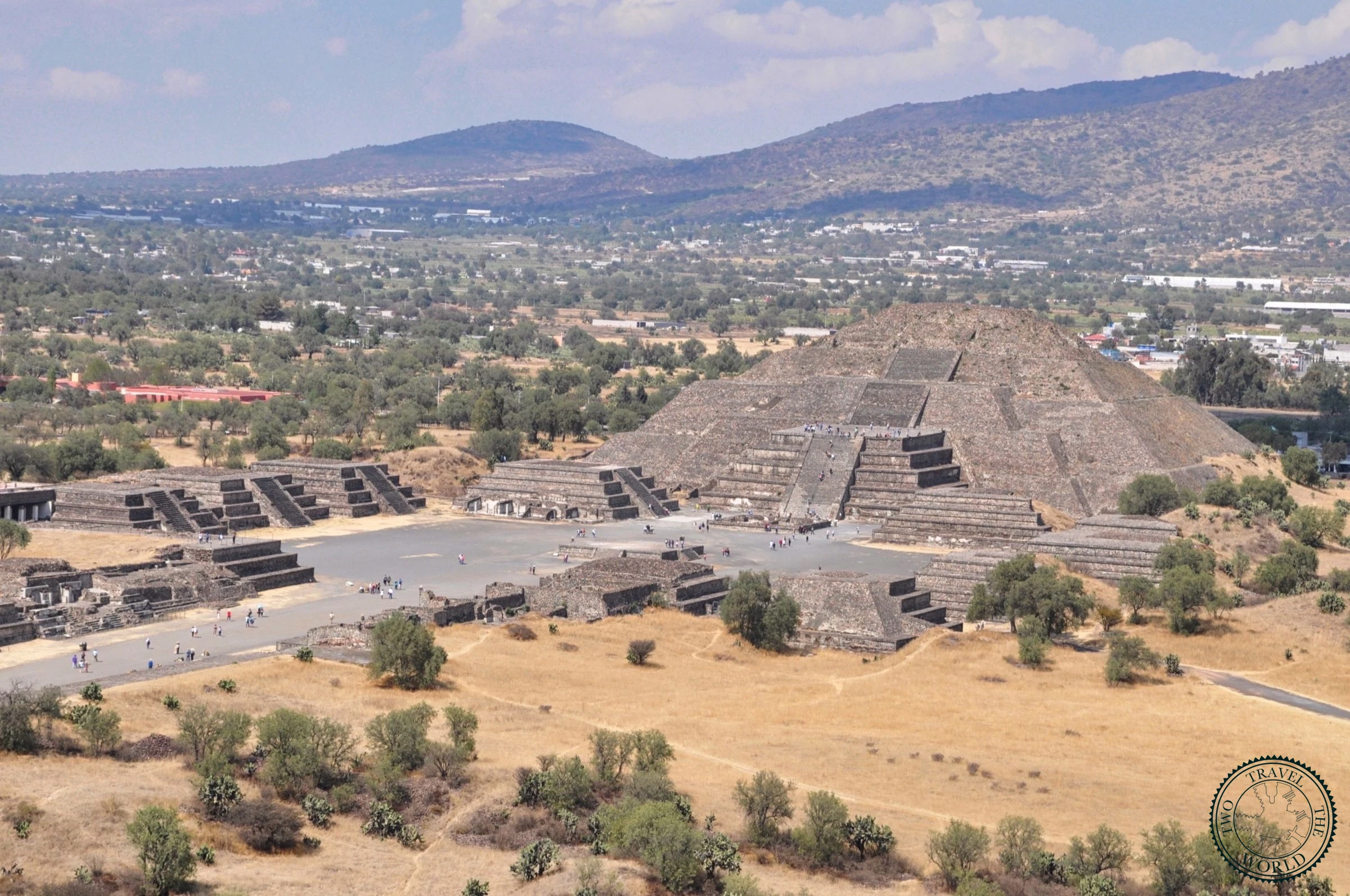
The Avenue of the Dead stretches over 2 kilometers (1.2 miles) and was the main axis of the city. Despite its name, it wasn't actually used for burials - Spanish conquistadors mistakenly thought the platforms lining the avenue were tombs, hence the morbid name. In reality, these were ceremonial platforms and residential complexes.
Teotihuacan: The Mysterious City
Teotihuacan was one of the largest cities in the ancient world, with a population estimated at 125,000-200,000 at its peak around 450 AD. Incredibly, we still don't know who built it! By the time the Aztecs arrived centuries later, the city was already abandoned and in ruins. The Aztecs named it "Teotihuacan" - meaning "the place where the gods were created" in Nahuatl.
The city's influence spread throughout Mesoamerica, and its architectural style can be seen as far away as the Maya cities of Guatemala. Yet the civilization that built it remains a mystery - we don't even know what language they spoke.
Have you visited Teotihuacan from Mexico City? Did you climb to the top of the Pyramid of the Sun? How did you find the 248 steps in the heat? Did you take the bus or join a tour? Which pyramid impressed you more - the Sun or the Moon? Have you visited other pre-Columbian sites in Mexico? Share your experiences in the comments below!
Tips for Visiting Teotihuacan
- Start early! To avoid crowds and unbearable heat, take the first bus at 6 AM or arrive when the site opens at 9 AM. The site gets extremely hot and crowded by midday.
- Bus from Mexico City: Take metro Line 5 to Terminal Central del Norte. Round-trip bus ticket: 104 pesos ($6 USD). Buses depart every 20 minutes from 6 AM.
- Site entrance: 70 pesos ($4 USD) includes museum access. Free for Mexican residents on Sundays (making it much more crowded).
- There is NO shade at Teotihuacan. None. Nada. Bring hat, sunglasses, and sunscreen. The sun is intense at this altitude and there's zero protection on the pyramids.
- Pack plenty of water and snacks. Once past the gates, food and drink options are non-existent. You'll need water climbing those pyramids in the heat!
- The bus drops at Gate 1 (main entrance). Gates 2 and 3 are closer to the main pyramids. Starting at Gate 1 means more walking but you see everything in order.
- The Pyramid of the Sun has 248 steep and uneven steps. Take your time climbing - it's challenging! The views from the top are spectacular.
- Site hours: 9 AM to 5 PM, seven days a week. You can re-enter after showing your ticket if you leave for lunch.
- Restaurant recommendation: La Gruta is about 15 minutes walking distance from the site. Unique restaurant in a cave with good Mexican food.
- Many vendors sell souvenirs on site. Avoid eye contact if not interested as they can be persistent. Most items are mass-produced, not authentic.
- Security note: Buses videotape passengers' faces before departure (both ways) as a security measure. This is normal practice in Mexico.
- UNESCO World Heritage Site since 1987. At its peak (450 AD), Teotihuacan had 125,000-200,000 inhabitants, making it one of the largest cities in the ancient world.
Teotihuacan was an absolute highlight of our Mexico trip. The scale of the pyramids is breathtaking, and climbing to the top of the Pyramid of the Sun (third largest in the world!) was incredible. The mystery of who built this magnificent city adds to its allure. It's easily accessible from Mexico City and absolutely worth a day trip. Start early to beat the heat and crowds!